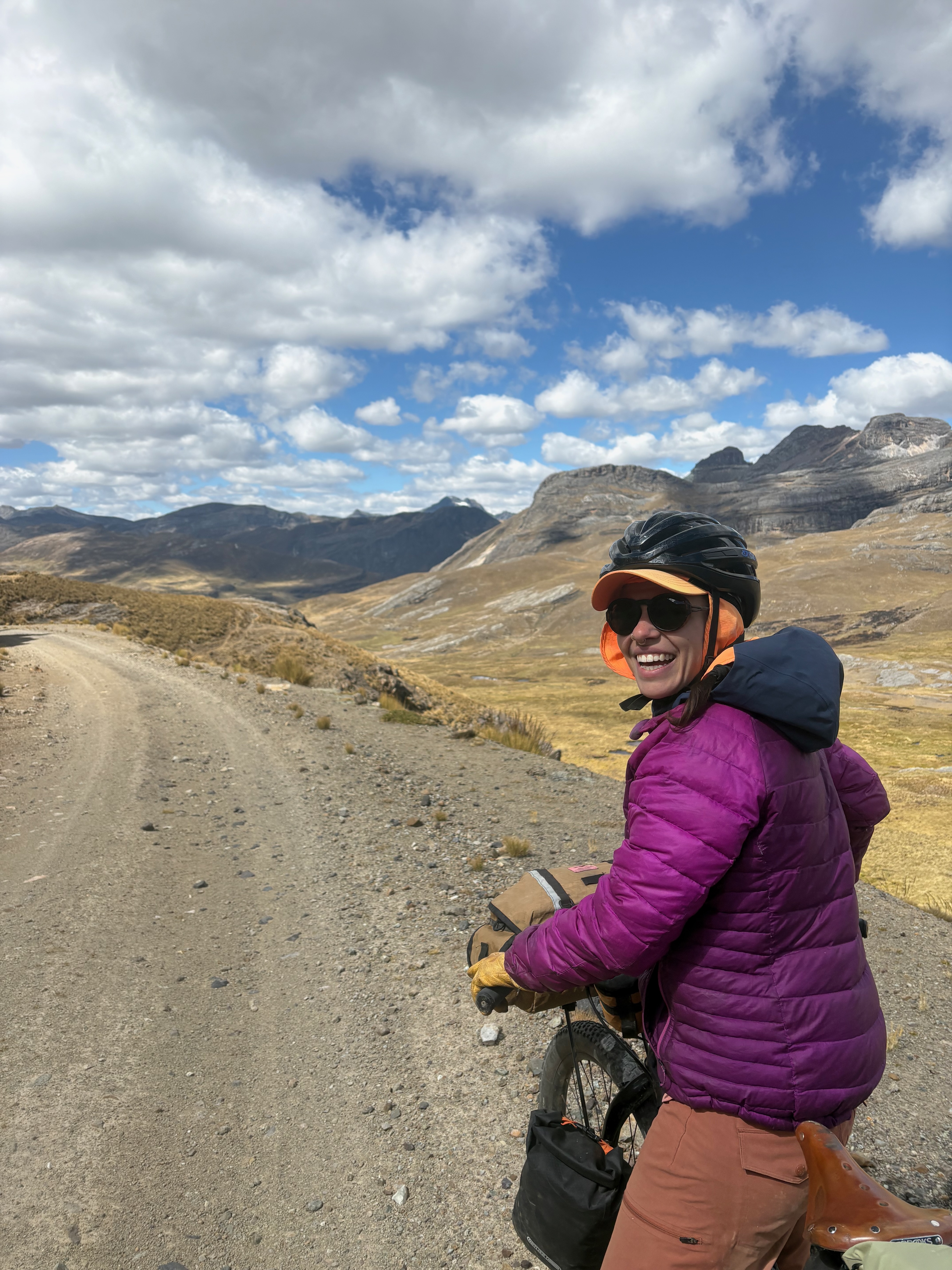
Un Poco Pendejo—getting high on la Ruta del Cambio Climatico
July 22, 2026
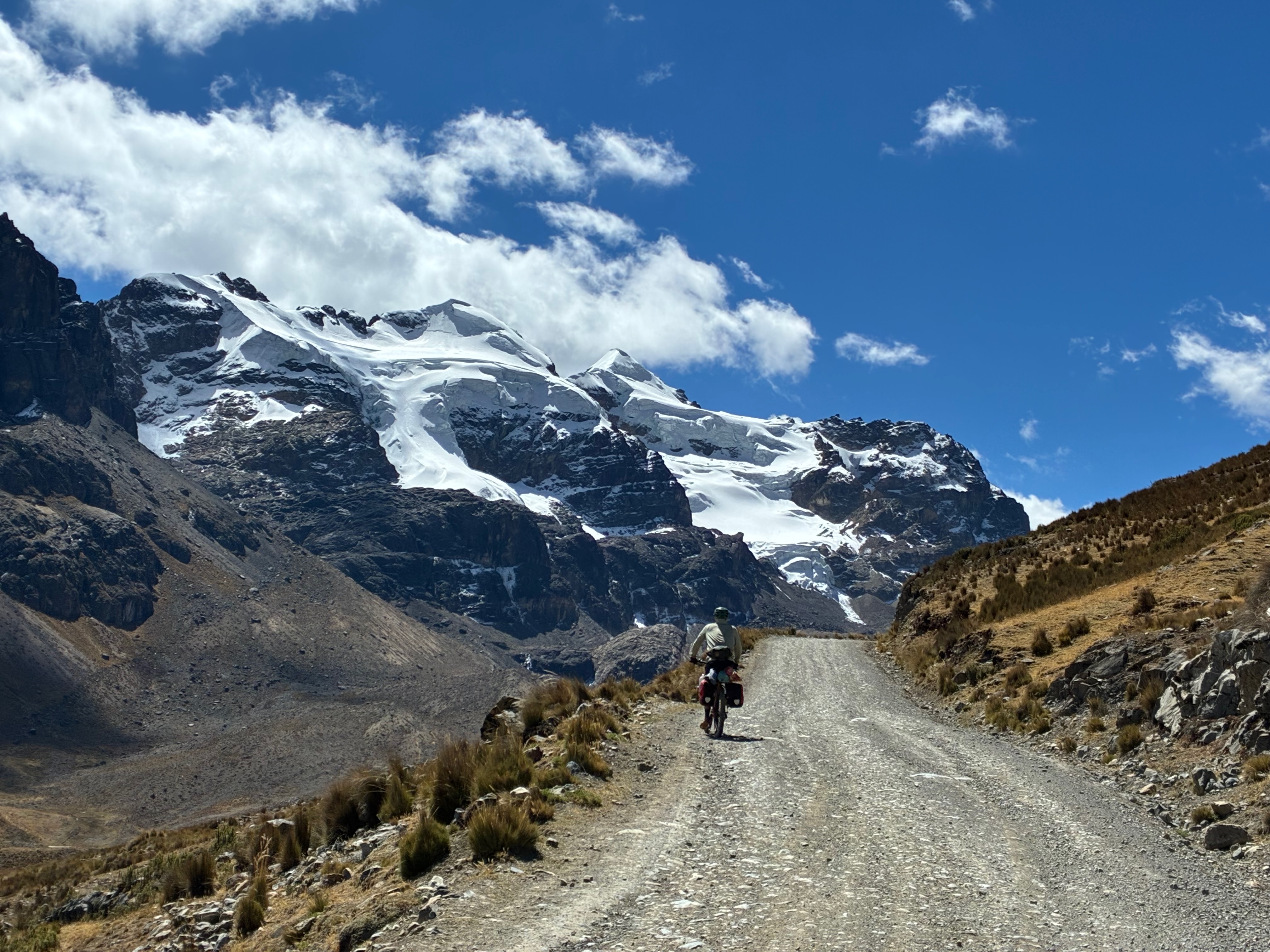
“I think my least favorite activity is pedaling up a hill on a bicycle”.
Jakob from Germany sat across from me at the only Indian restaurant in Huaraz (not half bad!) and was leaving town early the next day to trek on the Huayhuash circuit. 8 days of high-elevation alpine trekking wouldn’t phase him, but the thought of what we were about to embark on sounded impossible…
“Get ready to use your highest and lowest gears almost exclusively.”
Another table, a different day; Ryan and Allie from Colorado sat across from us gleefully putting down some well-earned steaks and piling our brains with beta—all the advice, strategy, warnings, and notes they had accumulated from over 1 month of riding the Peru Great Divide. Not only had they just completed the route, but they are continuing north towards Ecuador and Colombia, after a year of riding all over South America. So far, the Peru Great Divide had comprised their slowest riding, but the most rewarding.
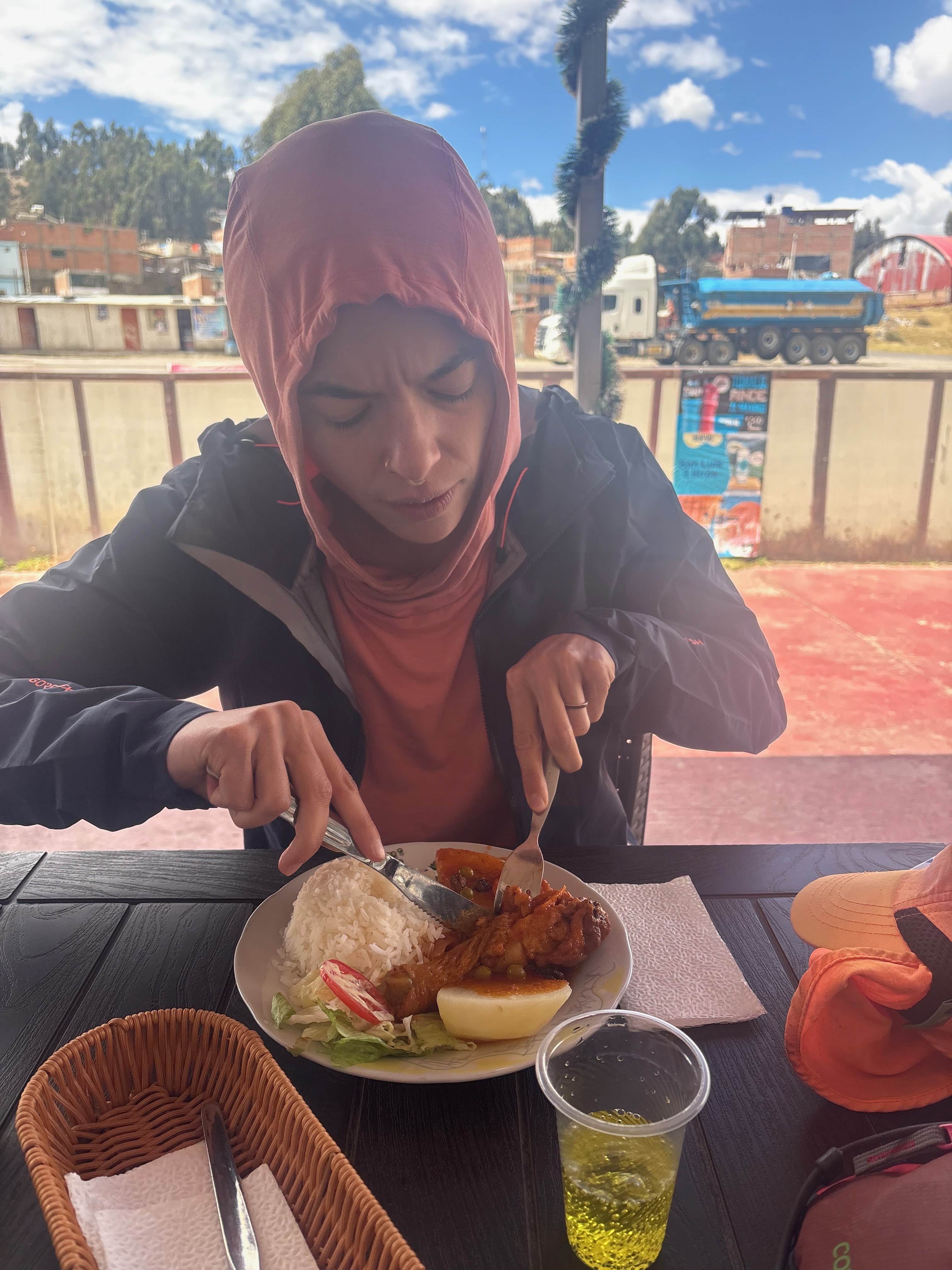
Ascending from Huaraz toward Pastoruri pass, on our first riding day, I reflect on these conversations and many others from our time in Huaraz. The landscape reveals itself a little more as the towns shrink and grow farther apart on the highway. Less trucks pass us and I can dedicate more time to take in the landscape. Golden wild grasses, interrupted by small squares of tilled earth. The Rio Santa follows the highway, shrinking as we move up. The wind picks up and the sun hides behind a cloud, but it’s not yet cold enough to layer up. We stop at a roadside cafe and both enjoy a hot meal for 22 Soles (~7 USD). Chicken, potatoes and Inca Kola for the endless climb we’ve already started.
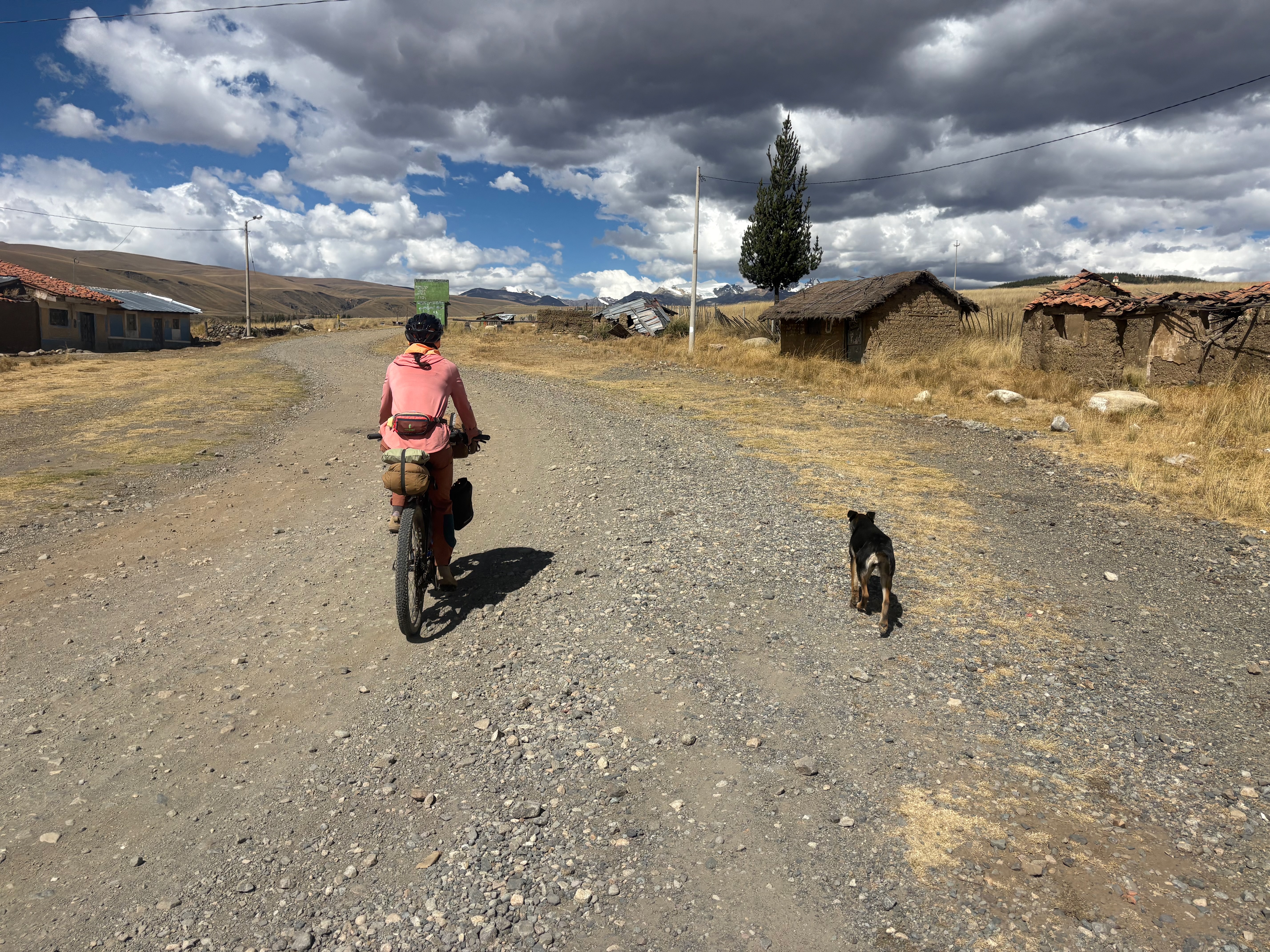
Why did we choose to bike here? I get that it’s not everyone’s favorite activity. Loading a 30-lb bicycle with 40 more lbs of gear and food, then riding up mountains is not exactly easy. To add to that, the air is thin due to the low pressure. So thin, that the effective oxygen percentage in the air at the high 4800m passes drops to around half of the normal ~21% it maintains at sea level, slowing us down even more. Many people have ridden the Peru Great Divide, but that doesn’t make it easy.
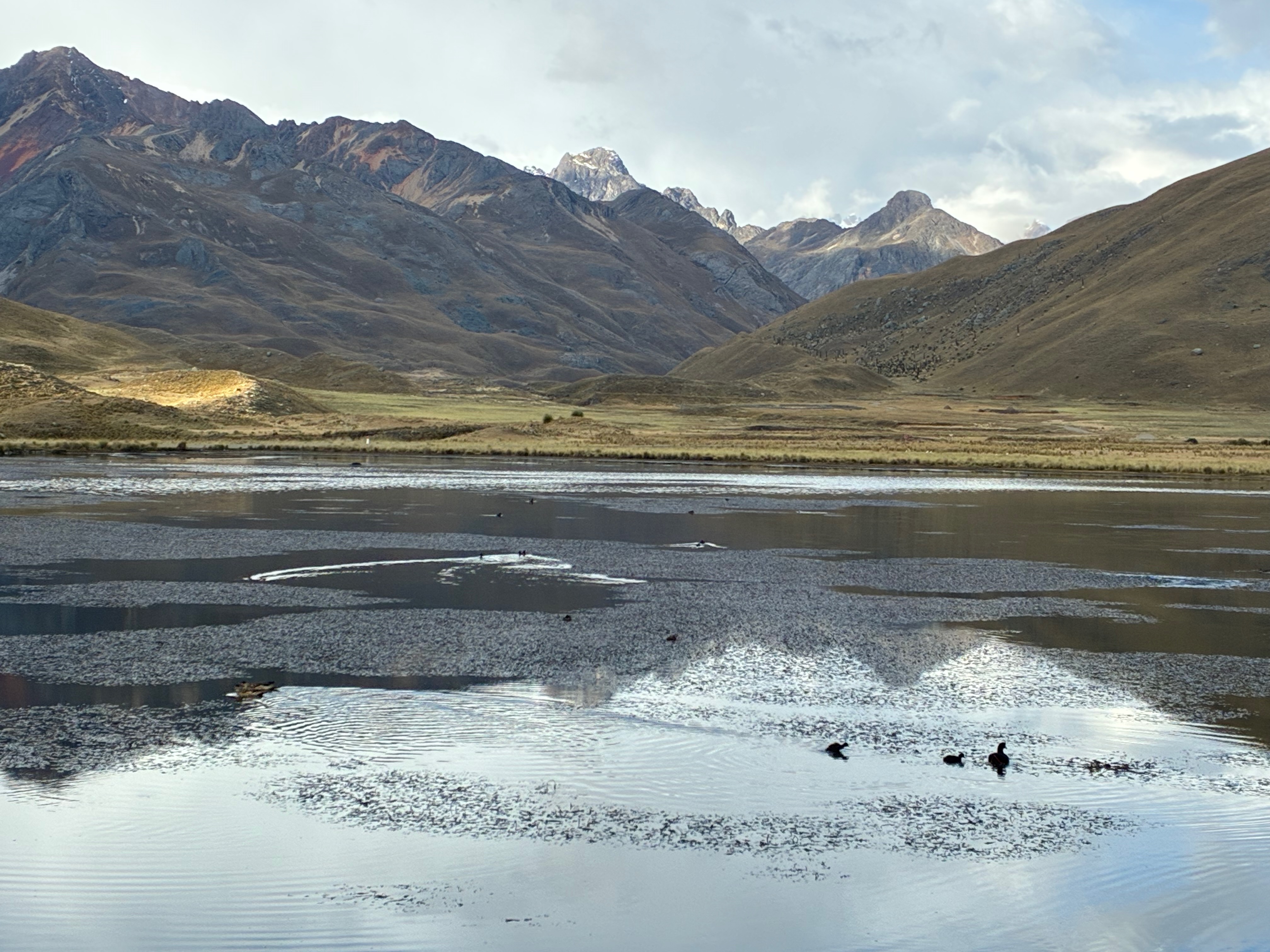
At the entrance to Huascaran National Park, we meet a young couple from Germany. Excited at seeing other cyclists, we ride together for a while. We stop many times, to fill water, catch our breath and regard the highest rainbow I’ve ever seen. Despite a barren-looking landscape, we round a corner and to our surprise is a lake brimming with geese and ducks. We decide to camp nearby. The other couple ride further than us and are long-gone the next morning.
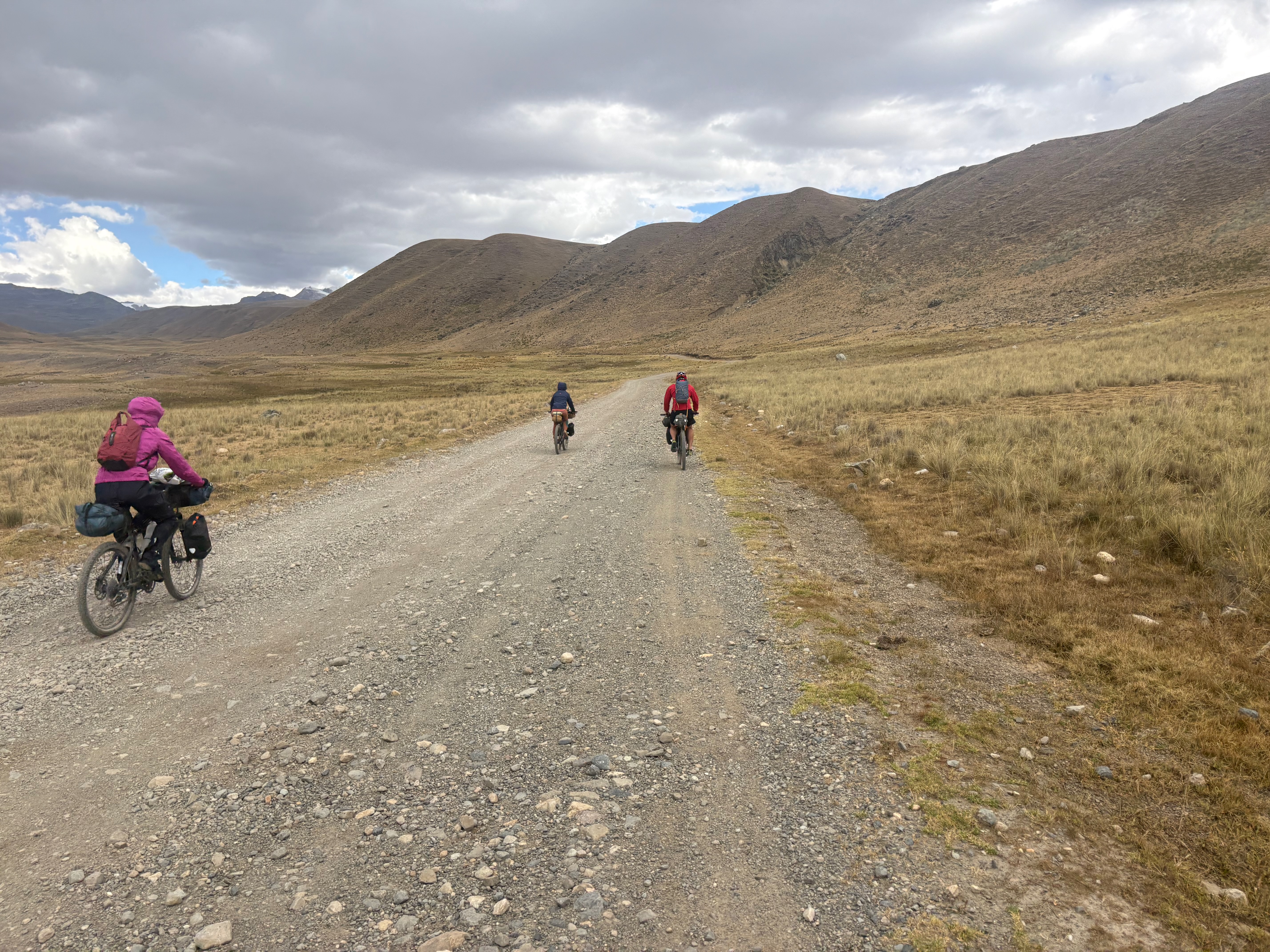
 A lot of sport cycling can be viewed as a ‘power process’, in which we identify a challenging activity, strategize and break it down into achievable goals, then execute. It feels good to ‘do a thing’, even better if done fast. I’m proud of my and Michal’s bodies. We train hard and consistently. We’re both competitive, especially against ourselves. Go a little faster than last time, get a little stronger… But that can’t be the only reason. I’m already slower than I was in my twenties. One day, I’ll be slower than I am now.
There’s nothing wrong with a fast trip. Sometimes, you only have a few days off. Hop on a plane, and a few hours later you’re in paradise. I staunchly refuse to quotidianize airplanes. Yes, it’s expensive, uncomfortable, prone to delays, and the coffee always sucks, but flying here was nothing short of a miracle. Without fossil fuels, we wouldn’t be in these mountains or able to eat the food that gets carted up from the more agricultural sectors of the country, let alone be in Peru at all. We could easily take cars and buses all throughout the country, but in that hurry, I’m learning that I lose something. I can’t quite put my finger on all of what that is, but I do know what I gain when in the saddle. Things look different from here. My attention is on the land, which unfolds gradually. When climbing, I feel the anticipation of every bend. Will the grade get steeper, flatten, or dive back down? How sunny is it? What’s our elevation? Where will the next source of water be? Which peaks and glaciers are we seeing off in the distance? How should we orient our tent to catch those early, precious defrosting rays? What kinds of plants are growing where?
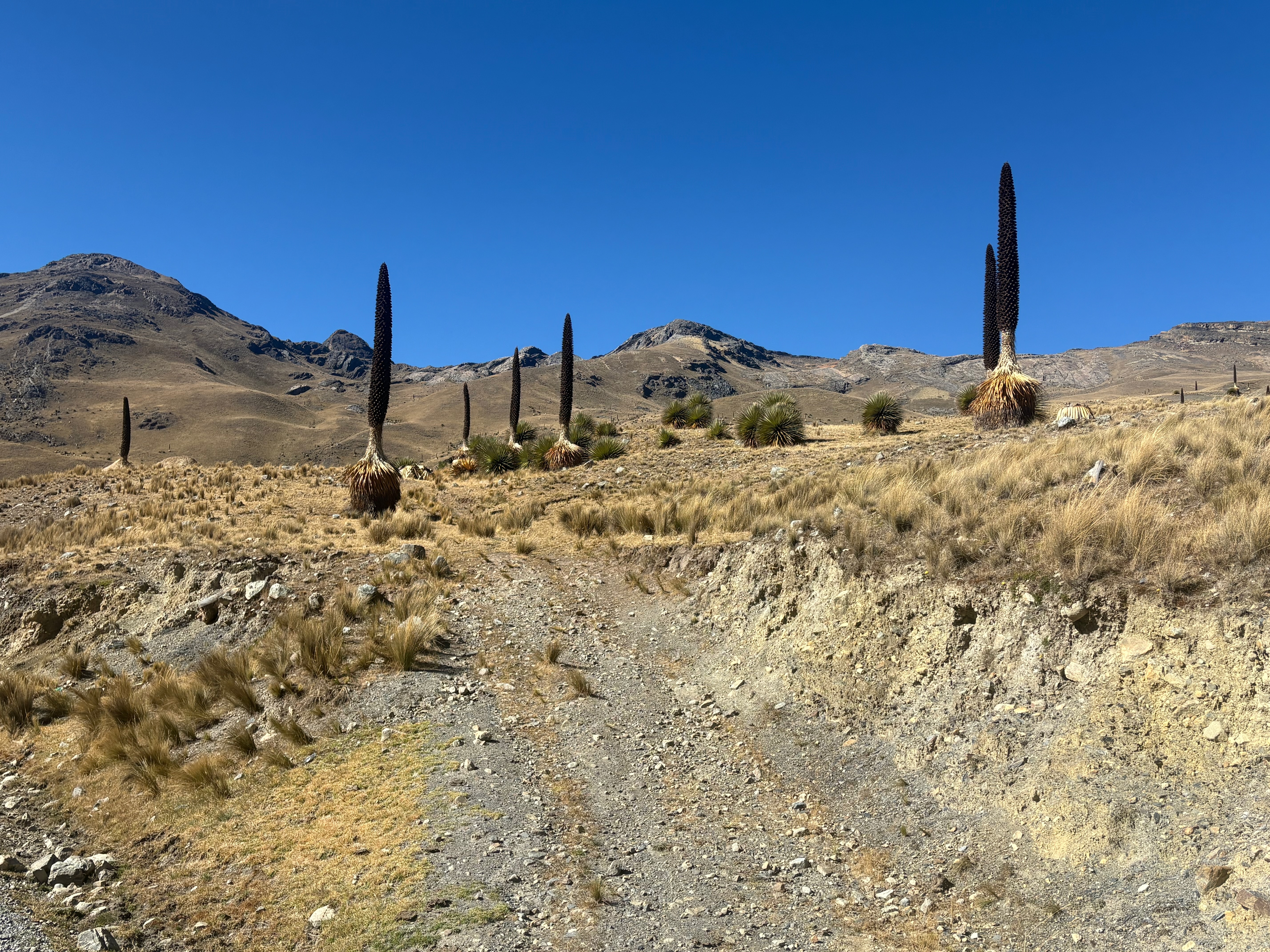
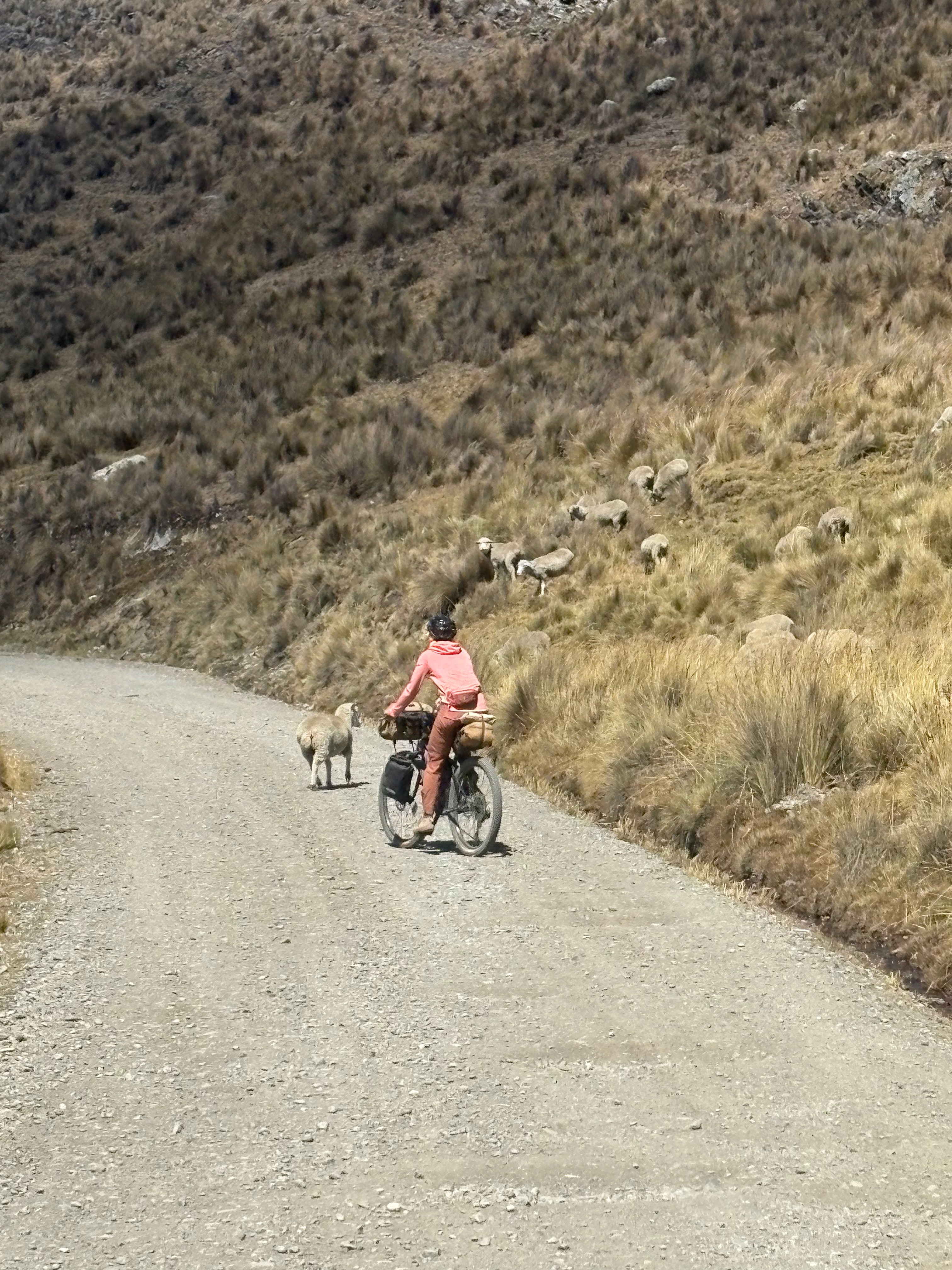 After camping undisturbed near the lake, we follow the bubbling mountain streams up, up, up, past herds of cows and sheep (and only two llamas!) to their sources of ice that glimmer in the day as if they had stored the light from last night’s stars. The most famous here, the Pastoruri glacier has lost over 25% of its size since the 1990s. The Peruvian government, in an attempt to re-boost tourism and call attention to this phenomenon, has renamed the route from Huaraz to the glacier “La Ruta del Cambio Climatico.” Tour buses zoom past us with their friendly honk, kicking up dust and blowing out emissions, their drivers likely sharing factoids about how fast the ice is melting, threatening the water cycle in the region and subsequently the pastoral lifestyles of the people who live and shepherd animals up there.
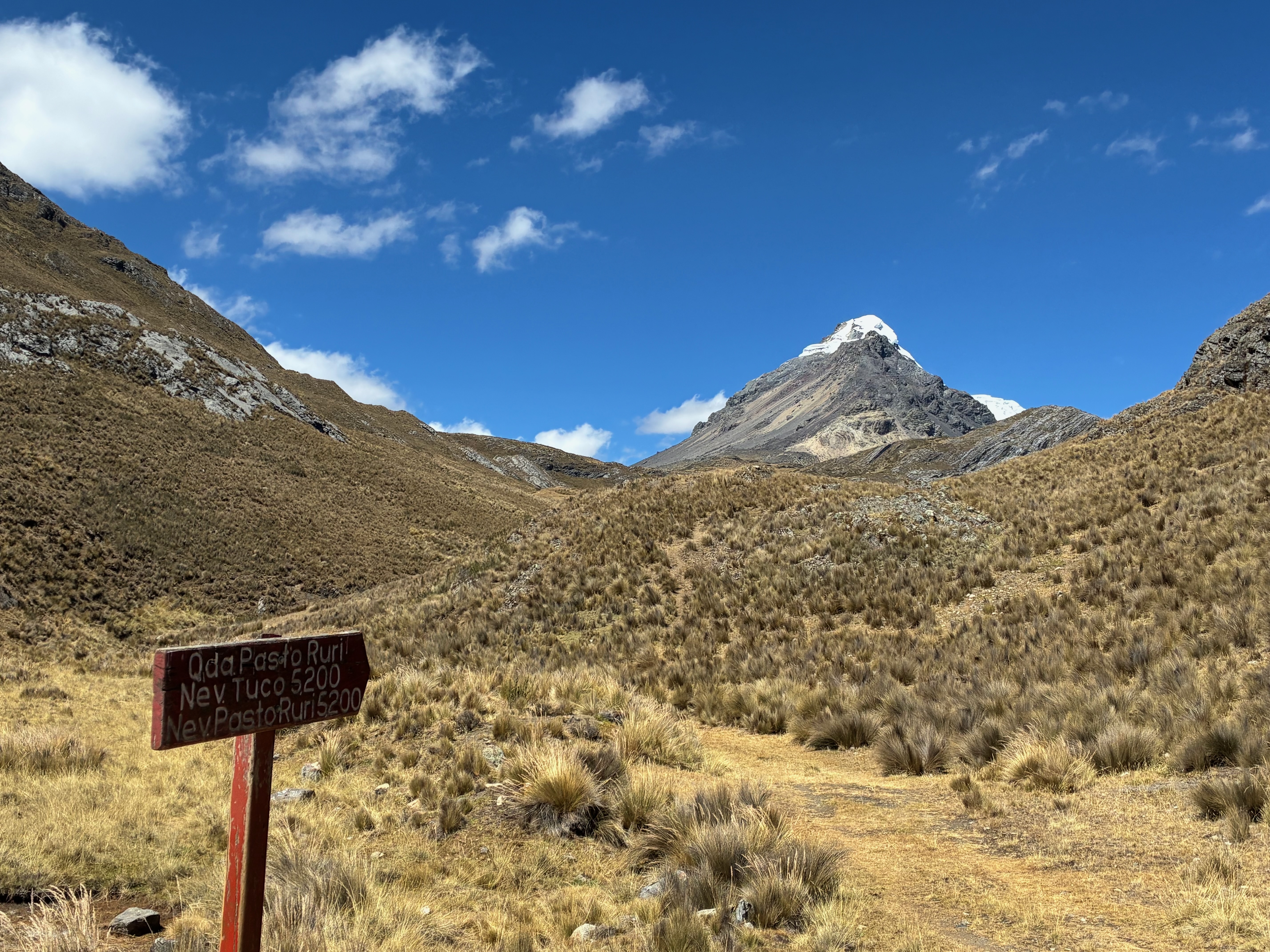
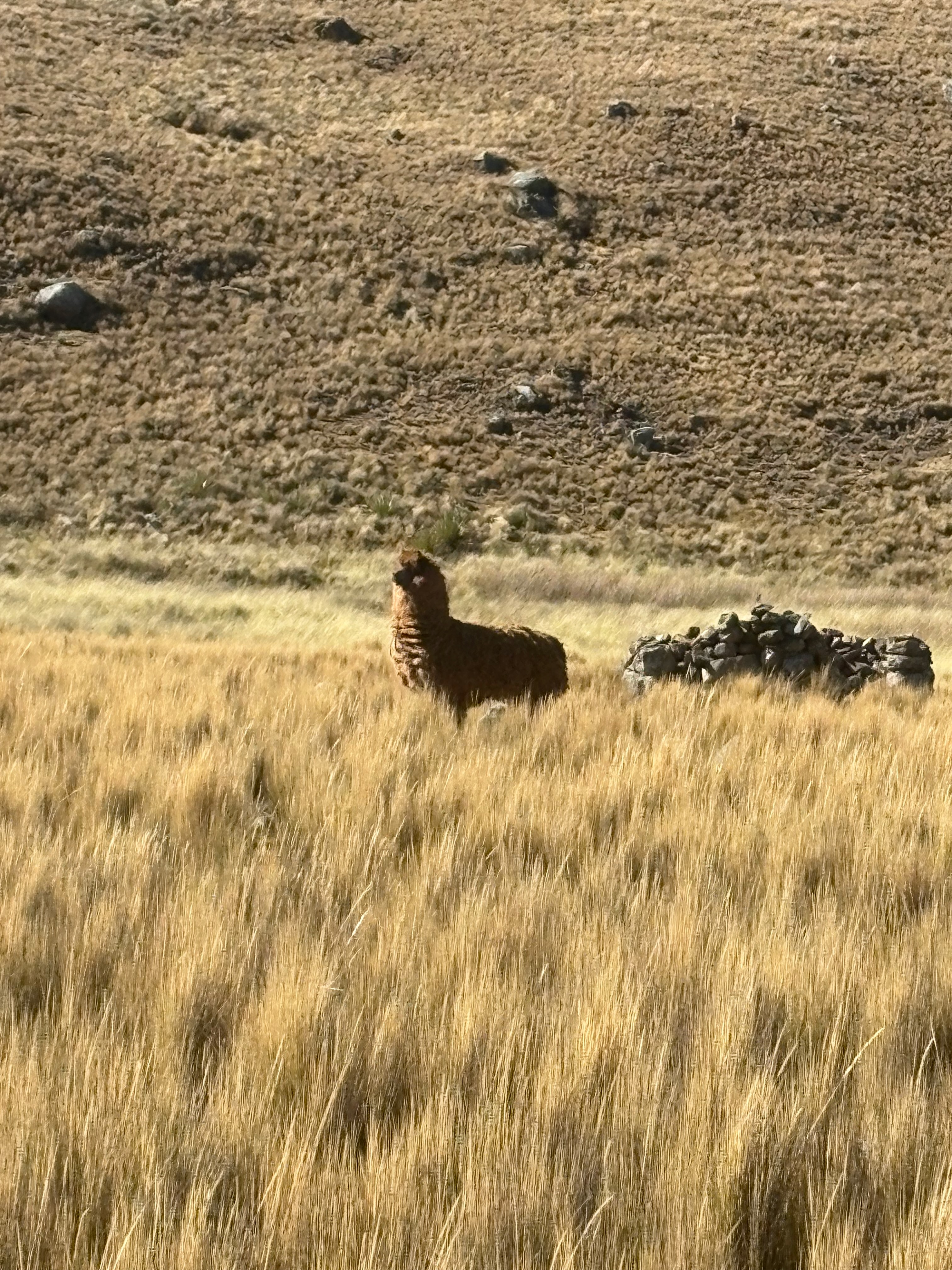 If you know any Spanish at all, you’re probably familiar with the word pendejo. I don’t need to elaborate on the many colorful applications it has in most other countries. Both a noun and an adjective, a rough translation is ‘stupid,’ but more. But in Peru, surprisingly, it can carry a different tone… My first conversation here was with our airport taxi driver who managed to fit both our cumbersome bike boxes into his smaller-than-a-combi van. He matter-of-factly dropped pendejo in conversation and when I acted surprised, he said it means something more akin to astute, clever, keen (I did verify this on the Internet, so we know it’s definitely true).
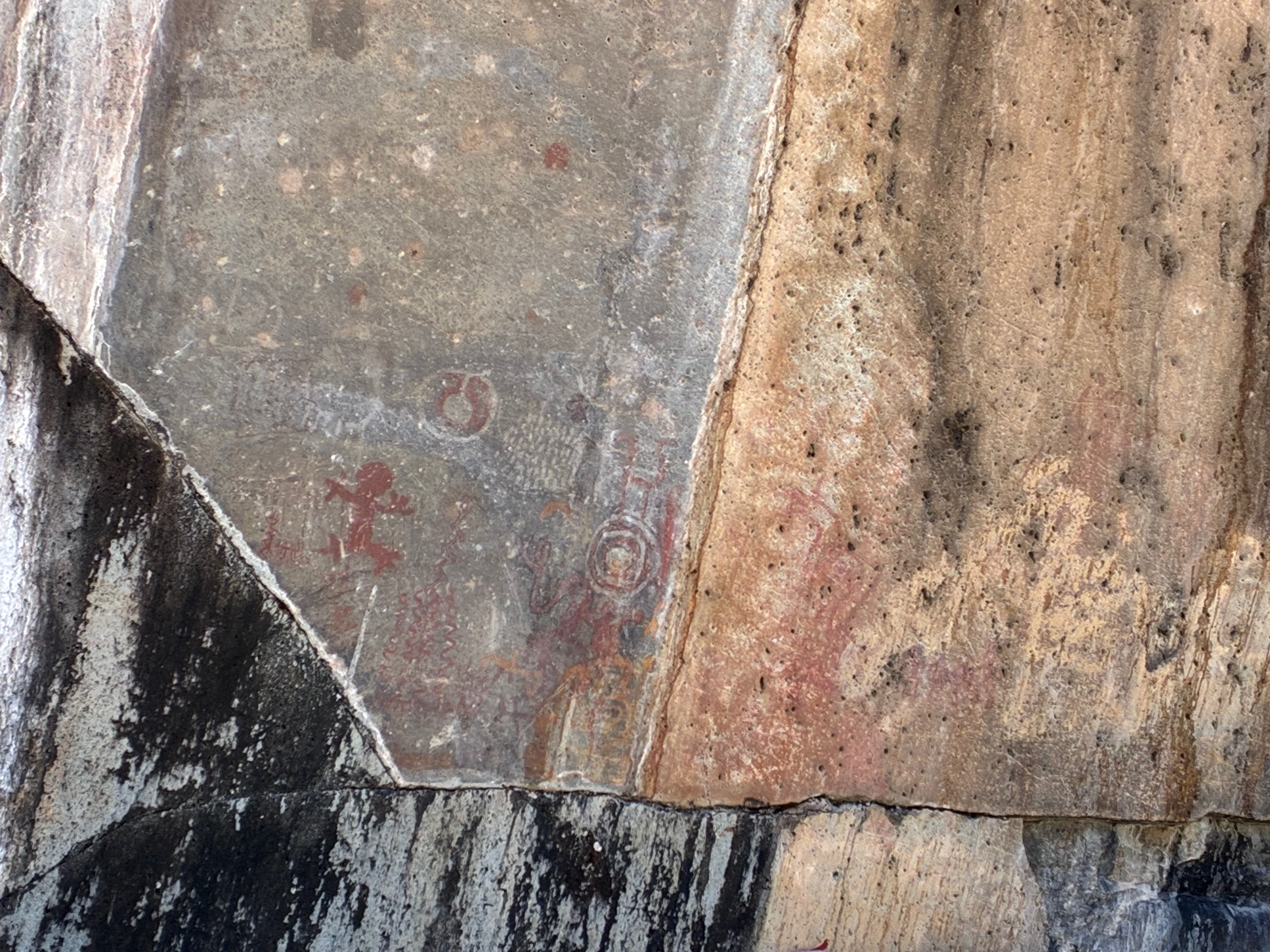
While in Huaraz, near some ruins, we met a mountain man who experiences the land talking to him. Like the mythical ranger Aragorn, but with a big helping of childlike wonder, Cristian saw things in the landscape we simply did not. We would see a pile of rocks, and he could see ancient temples, houses, furniture, an entire village, showing us specific rocks having been hewn into specific shapes for specific purposes. Ancient medicinal trees planted by his ancestors, seeds and cuttings of which he plants forward into the future. Our modern conception of land as nothing more than a pretty background or a green theme park to our activities pales in comparison to the rich tapestry of stories he pulled out from under the shapes of stones and from the fragrant scent of eucalyptus leaves.
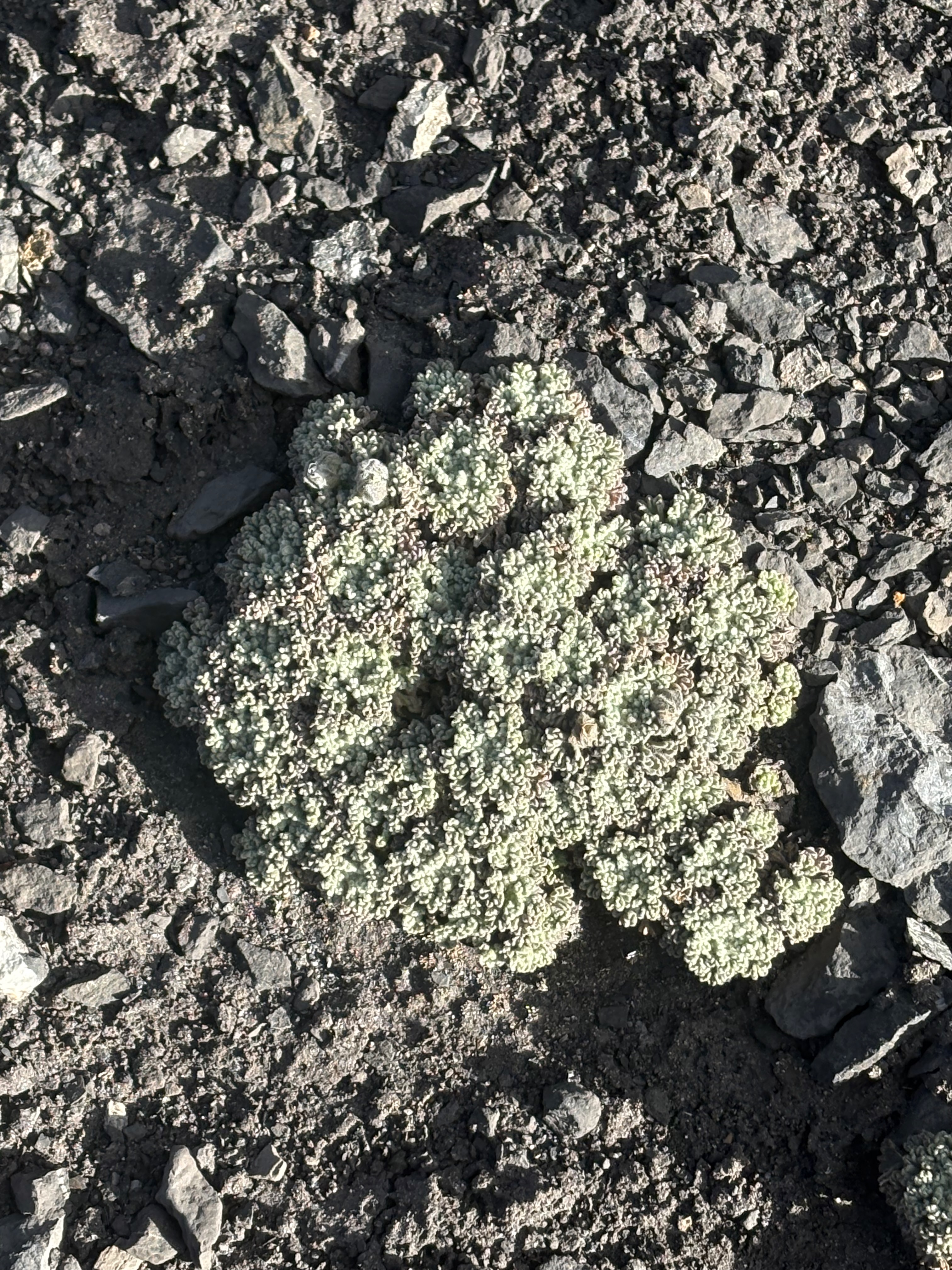
Pushing down on my pedals, pulling in the crisp, thin air, I notice the alpine grasses are almost gone, replaced by nothing more than bright green and orange lichens growing on black rocks. We must be near the glacial pass. I confirm on my GPS. I wonder if maybe we can learn from the land too. Maybe we can learn to know where we are without a map, to hear what the land needs from us, and what we need from it. In a time when Tik Tok streams on smartphones as endlessly as the seemingly-infinite alpine rivers flowing from the very finite glaciers, can we learn to pay attention?
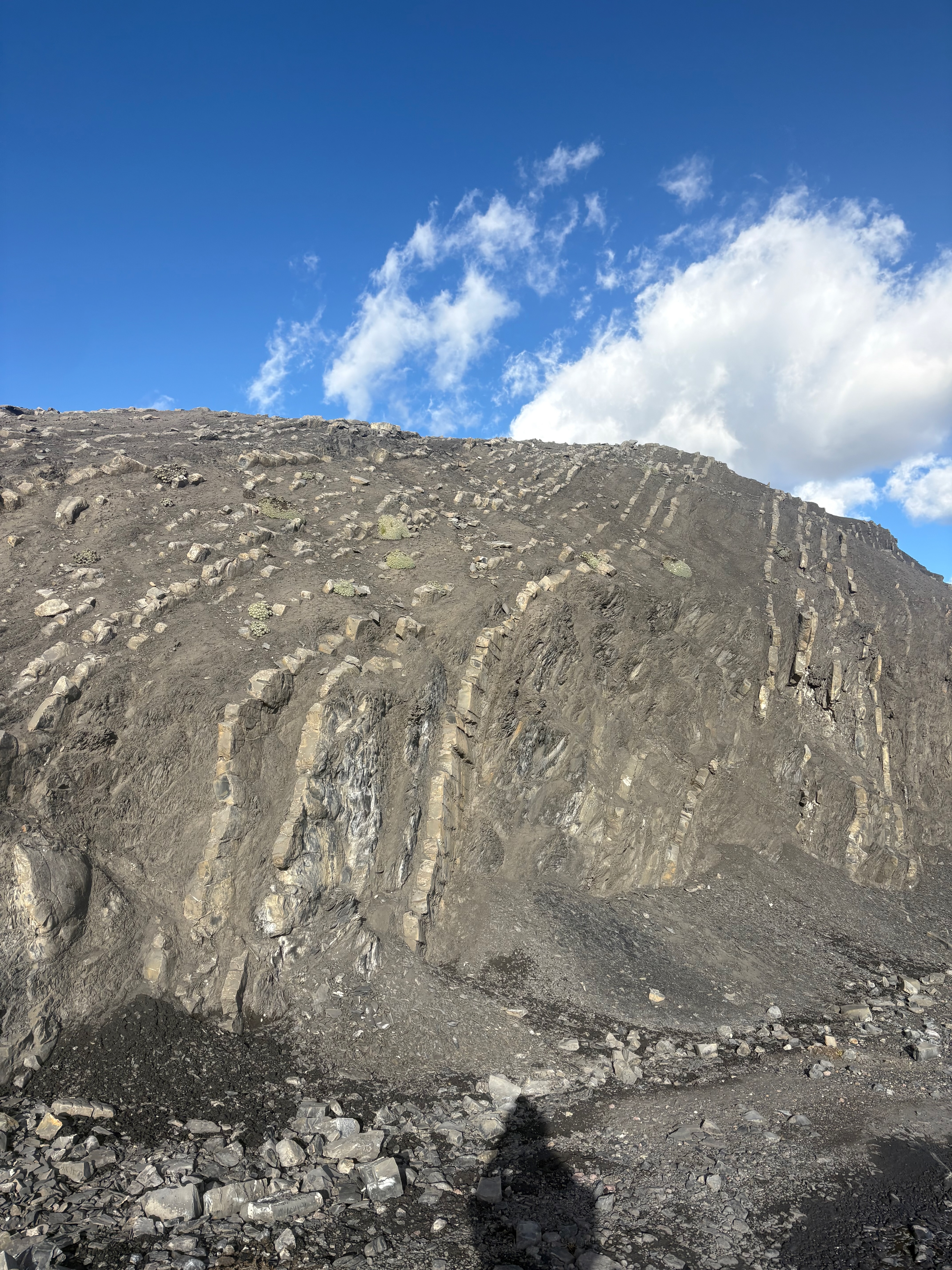 What comes up must come down. I put my thoughts away and direct my focus entirely to the descent. The sun is quickly setting and I’ve got 3 layers on, picking up speed, but not too much. Hitting one rock the wrong way can send me to a place I’d rather not go to. Even once we rejoin the butter smooth highway, we descend in the twilight at the fastest possible speed while still slow enough that we can somewhat feel our fingers beneath our thick leather gloves.
Cristian is a clever man. To him, this knowing how to read the land stuff is not just games with rocks to him. It’s not something he blogs about, a hobby to post about on Instagram. He knows how to descend a rocky mountain at night, in the dark, without getting lost. He says it’s easy when you’re paying attention. He knows which plants will help him and his family with which illness. He knows how to build a fire and safely contain it on this dry land. He knows how to construct buildings that can survive earthquakes. Sounds pretty pendejo (clever) to me.
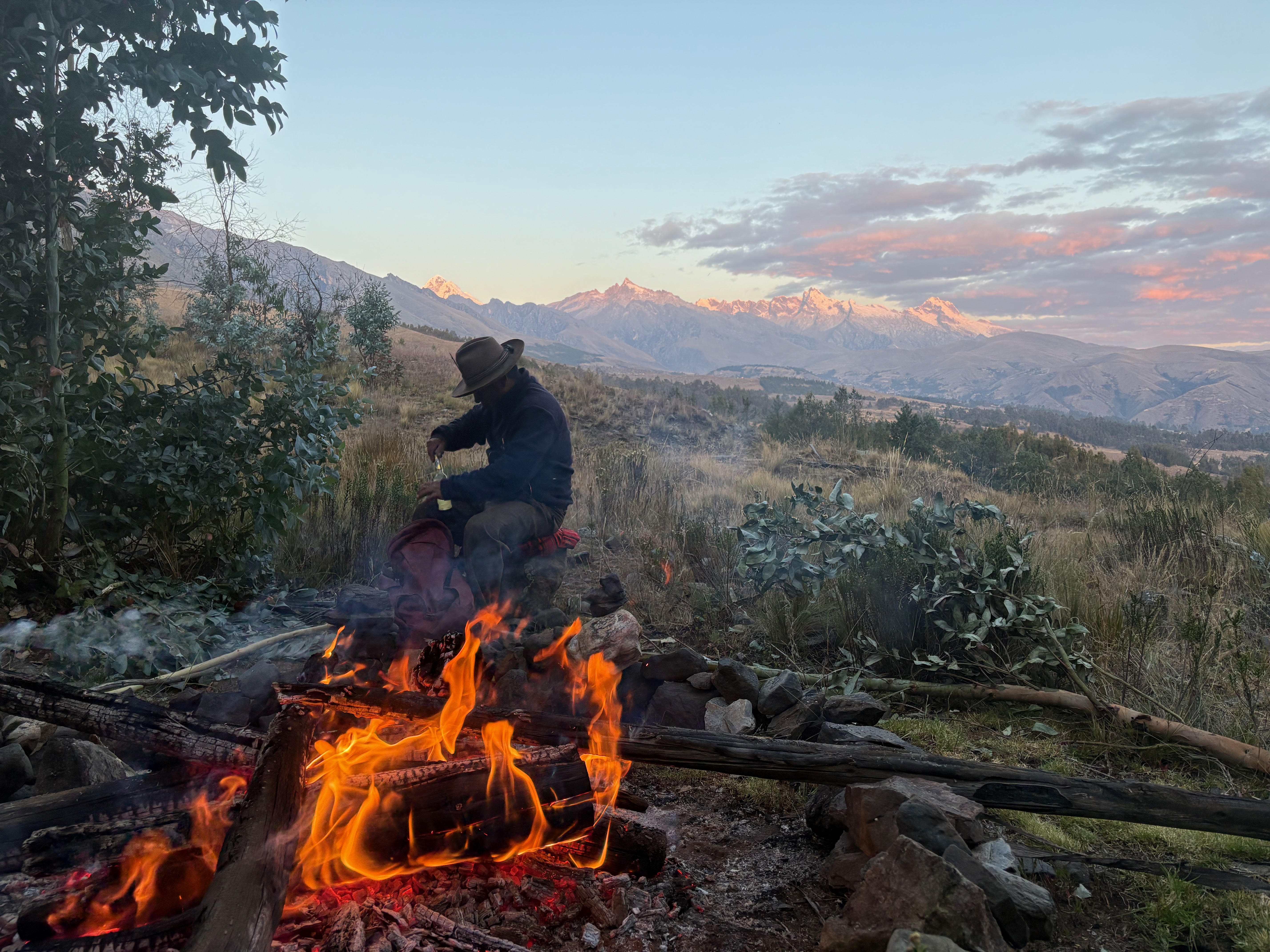 Michal and I would be pretty pendejo (foolhardy) for thinking we can waltz in from another continent and take what we want from this place and experience for free. To barge in and pull out some pictures of us with the sacred mountains without so much as a ‘thank you’ or even a reflection on where we are seems rude and a waste of everyone’s time. Thankfully, the mountains have plenty of time compared to us. All they ask in payment is our presence and attention. Easy, measured, our bodies and bikes in total flow with the mountains and everything on them, we descend in the twilight to a truck stop with a bed. It’s easy. It’s the best high. And it’s puro pendejo.
(By Carlos)