Mennonites 1: the issue of self-identification
August 19, 2026
“That’s weird.”
Sometimes I think I’m too open with the details of my life. Perhaps it would be better for me to be more reserved, especially with strangers. There’s nothing worse than opening up to someone and feeling like they misunderstood or judged me, although that’s not exactly what happened here. I don’t think my interlocutor misunderstood or judged me. I think she made an astute observation. What I am about to do is, indeed, weird.
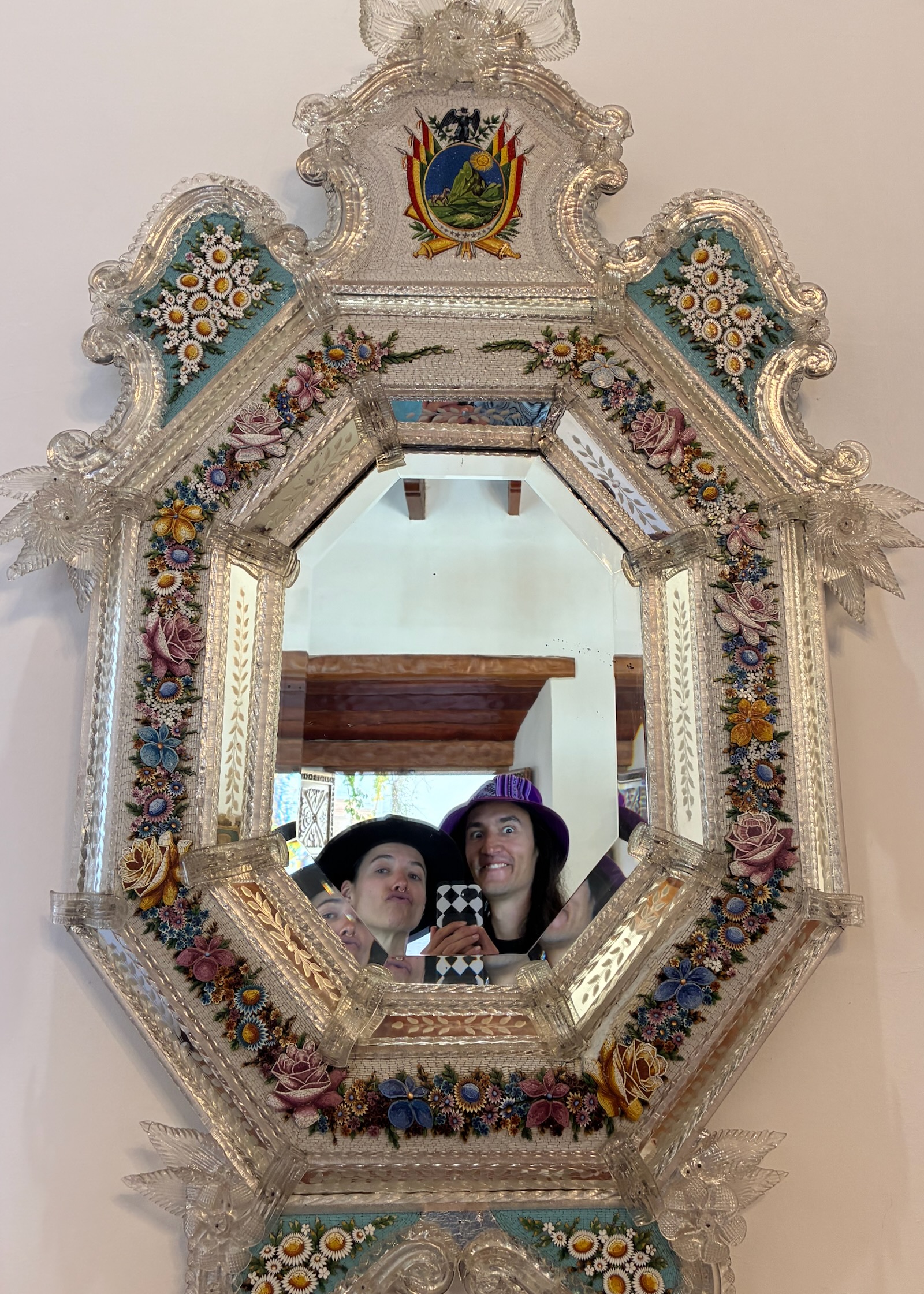
Some people know the story of where my mom’s family comes from, other people don’t. I don’t often choose to go there in conversation because, well, it’s weird. It’s unexpected and complicated. It can quickly derail a conversation and make the whole thing “about me,” which is uncomfortable and an unintended consequence of trying to answer with the full truth. When meeting someone for the first time, people tend to expect a simple answer to this question. I learned by trial and error over the years that I have a few options with which to answer the question “where are you from?” I often respond with fragments of the truth in relation to whom I’m speaking. For example, when people ask me this while I am traveling, I say “Arkansas,” because that is where I currently live, and is the most relevant answer to what I assume they are asking me. When someone in Arkansas asks me where I am from, I most often say “Ohio,” because that’s where I lived the longest before moving to Arkansas. Most of the time I assume the person asking doesn’t want the full truth, even if they think they do. The full truth of where I am from can’t be understood without understanding where my mom is from, and that is truly a huge can of worms. The whole story is almost five hundred years old, and that history is a very important background to understand why my mom was born in Bolivia.
The question of self-identification has been important to me for a very long time, not only because of my own life experience, but also because I think it’s relevant to everyone who stops to ponder what it means to be “from” a place, or what it means to identify oneself as part of any group of people at all. I have often felt pressure to “fit in” to some simple category, to be easily understood, to not be complicated, and certainly not to have contradicting identities. I imagine the voluntary self-identification of race, ethnicity, and gender options on job applications or anything administrative for school, and how the cultural expectation is drawn right there on paper. We do not often treat identity as something changeable or fluid; we believe it is fixed and unchangeable, and it is symbolized by a box that you fill in with pencil, and you can only choose one.

I am a sensitive person. I think about pretty much everything in a contemplative and analytical way all the time, and I have spent much of my life contemplating and analyzing the aforementioned cultural expectation to put myself in boxes. My life experience has been rather extreme in some aspects and has made putting myself into a simple box incompatible with the truth at times. I have moved so many times, and I vividly remember a moment when I realized that my life would not be easily understood or accepted by some people. I was in high school, I had moved from Minneapolis to Canton, Ohio a year prior, and I was visiting some friends from Minneapolis for the first time after moving. I don’t remember the context exactly, but in conversation, an old friend said with pain and accusation, “you’ve changed.” I realized that I had transgressed her expectations in some way just by being.
We don’t stay still as people. We change. We transform. It might be extreme, as in my case, or slow, but it is guaranteed. The one thing that I can expect from the people in my life is that they will change. I will change. My relationships will change. Actually, everything will change. As Octavia Butler famously said, “God is change.” I often wonder if the truest definition for love is letting people go, letting people change.
Identifying myself as being “from somewhere” has always been hard, because I am from many places. When I was younger this was often painful because I thought I was the only person who had no idea who I was or where I was from, but as I’ve lived a little more I’ve realized that my experience is shared by many people in many ways, maybe even everyone. I don’t as easily feel judged or misunderstood anymore, even if I am being judged and misunderstood.
So when I was telling a Bolivian café owner that I was going to visit my Mennonite family in Santa Cruz for the first time, and she said “That’s weird,” I first felt a little pain, and then observed that actually, yes, it is weird. There’s not a lot of people that visit Bolivia so that they can meet their Mennonite family. How exciting.