Life is a Circus - Lima
July 9, 2026
I realize I am not posting chronologically, and it’s because I don’t always process my life chronologically. Perhaps more on that later.
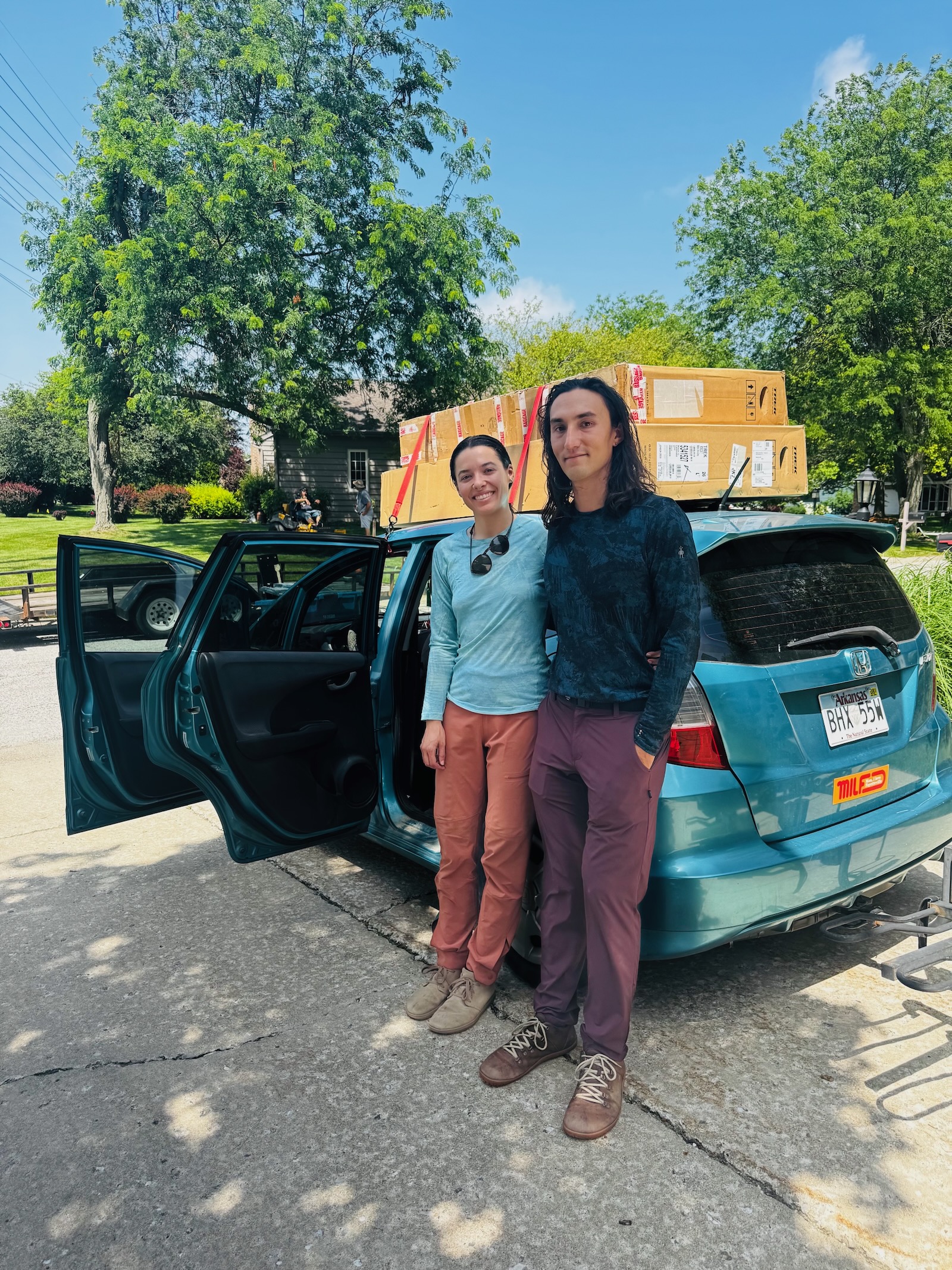
Getting ourselves and our bicycles to Perú was stressful. We sort of preemptively knew that we'd need to buckle up for a bumpy ride. It began with getting to the Chicago airport. My mom lives in Valparaiso, Indiana, about an hour and half away from ORD. Our flight left at around 3:20pm on July 1st, so I figured that leaving her home at 11am would give us plenty of time. We left 20 minutes late because our ratchet straps were too short to fit around two bike boxes on top of our Honda Fit, so Carlos got creative and found a solution, but it took some time. Then we were in the car for 2 hours and 40 minutes because the traffic was insane. So after three hours, we got to the airport and unloaded the bikes from on top of the car, and Carlos’s bike box opened from the bottom and his bike fell out in pieces onto the asphalt. We've traveled with bikes in boxes to and from airports before. We’ve done the thing with the boxes on top of the car with the ratchet straps, we’ve secured the cardboard boxes well so the parts wouldn’t fall out, but somehow it was like we were doing this for the first time. So that’s how it’s gonna be. Fine, we packed up his bike back into the box with the extra packing tape I brought along (because we are sometimes smart), gave Mom a big hug and a kiss, and finally made it into the airport with an hour and 10 minutes until the gate for our flight would close.
At the Copa Airlines desk were two attendants, both occupied with a distraught man who was upset about his luggage missing. The attendants were apathetic, "no, we can't and won’t help you", and the man was very frustrated and insistent on demanding help that he wasn't going to get. This useless back and forth went on for quite some time; the man did not get what he wanted and the attendants didn't care. It cost us another 10 minutes of anxiously waiting. I kept wondering why one attendant couldn't field this angry man so the other could help us. Maybe one was officially working the desk and she called the other in for backup. Finally, he left, and it was our turn to be "helped". We handed over our passports and immediately discovered that we needed a visa to visit Perú, because our return date for our flight was over 90 days later. Under 90 days, you don't need a tourist visa. Over 90 days, you do. It didn't matter that we were planning to cross into Bolivia by land, we needed to provide proof of a flight out of Perú if we were going to go to Peru for the dates we'd selected. While we were having this stressful conversation, the angry man returned to the counter, interrupted us, and took another 5 minutes to complain to the attendant, who allowed him to interrupt her work with us and did nothing to make him wait his turn. After he left again, more people showed up in line behind us, and the second attendant at the desk miraculously began doing her job. Okay, so we could have had this conversation 15 minutes earlier, how wonderful. Eventually, we settled on having them change the return date from October 2 to September 27 for a hefty fee, but I had a voucher with Copa Airlines that I was able to put towards that fee and would never have used otherwise. They also didn’t weigh Carlos’s bike box. Only mine. We probably skipped an overweight baggage fee, since Carlos’s bike box always seems to be overweight no matter how many times we weigh it at home and how little we pack inside. We said goodbye, good luck, and Godspeed to our bike boxes, got to security, didn't get our carry-on bags checked at security (incredible, since we always seem to carry something suspicious to security), and ran to our gate with 20 minutes before gate closure.
Many hours later, in the early morning of July 2nd, we arrived in Lima. Oversized luggage always takes a lot more time to arrive than regular luggage. The wait is a bit nerve wracking. The boxes finally arrived, sort of intact. The TSA had torn through them and left Carlos's box open, and didn't even bother to tape it back up. They opened the contents of bags he had inside the box and left the contents (expensive tools, parts, camping gear) loose and flying around the box, which has holes in it designed for handling. Miraculously, everything he'd packed inside was there upon further inspection. We got a nice man with a van to take us to our Airbnb in Barrancos, met our host, and got settled for bed around 3:30 am.
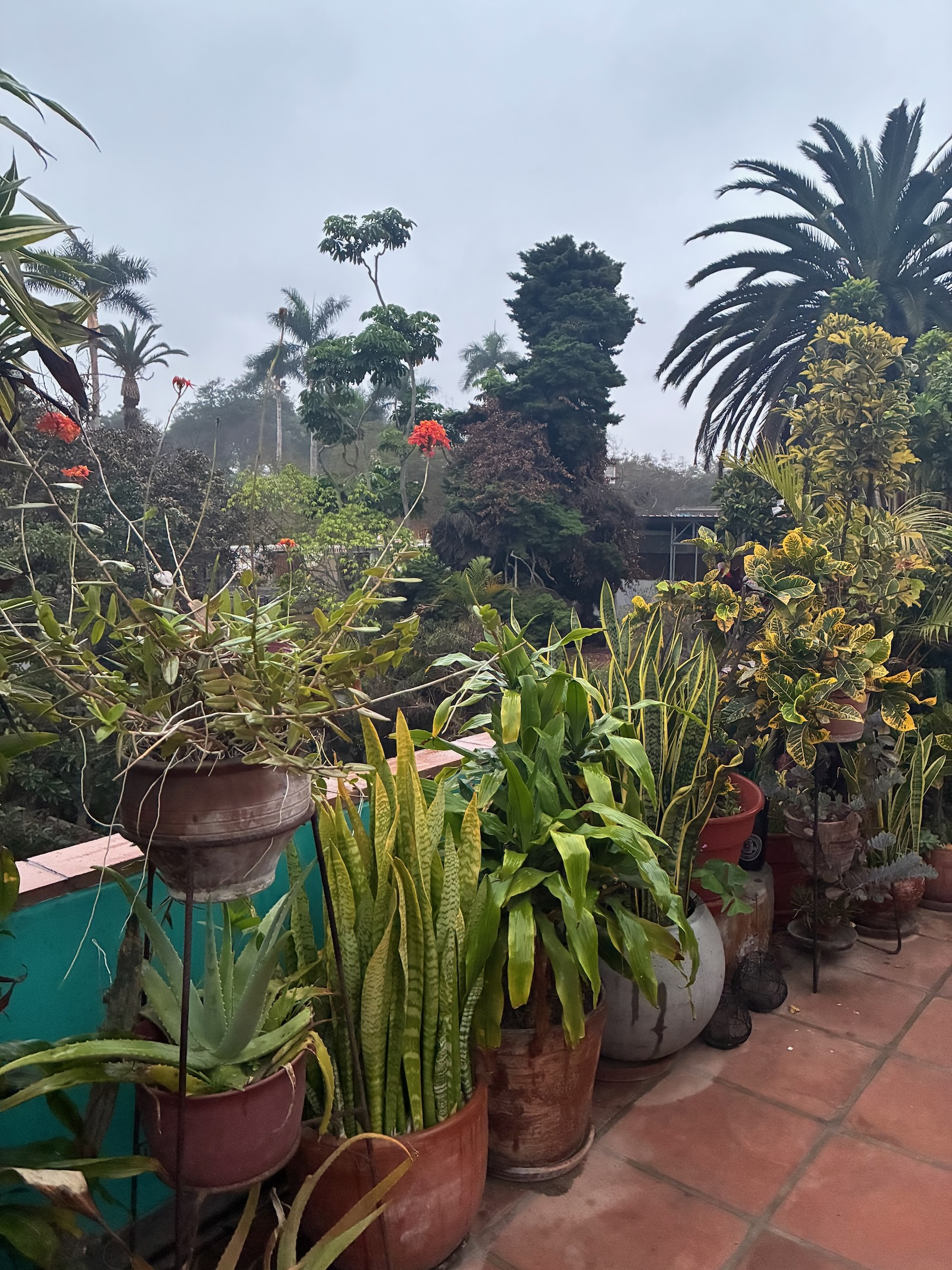
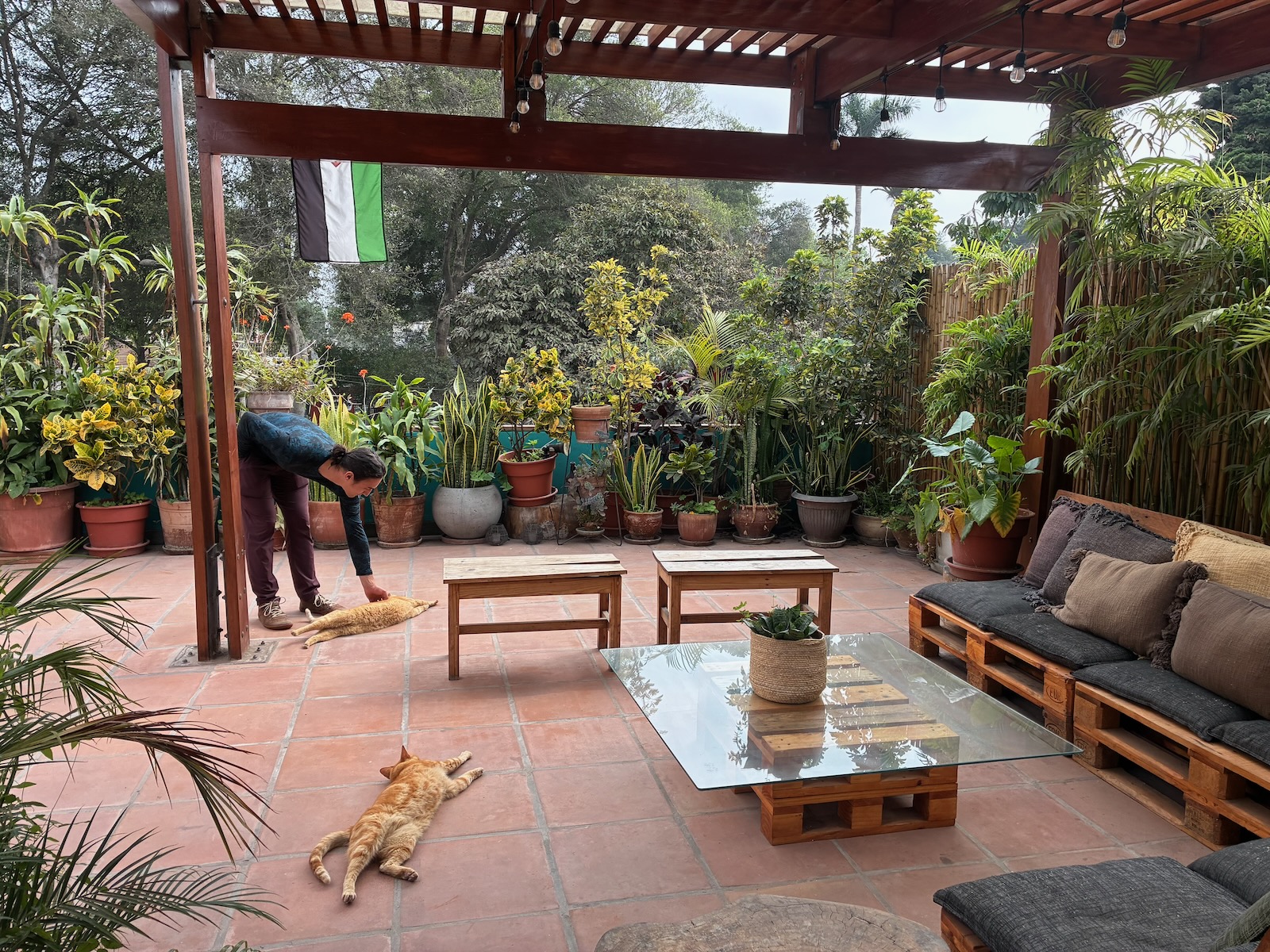
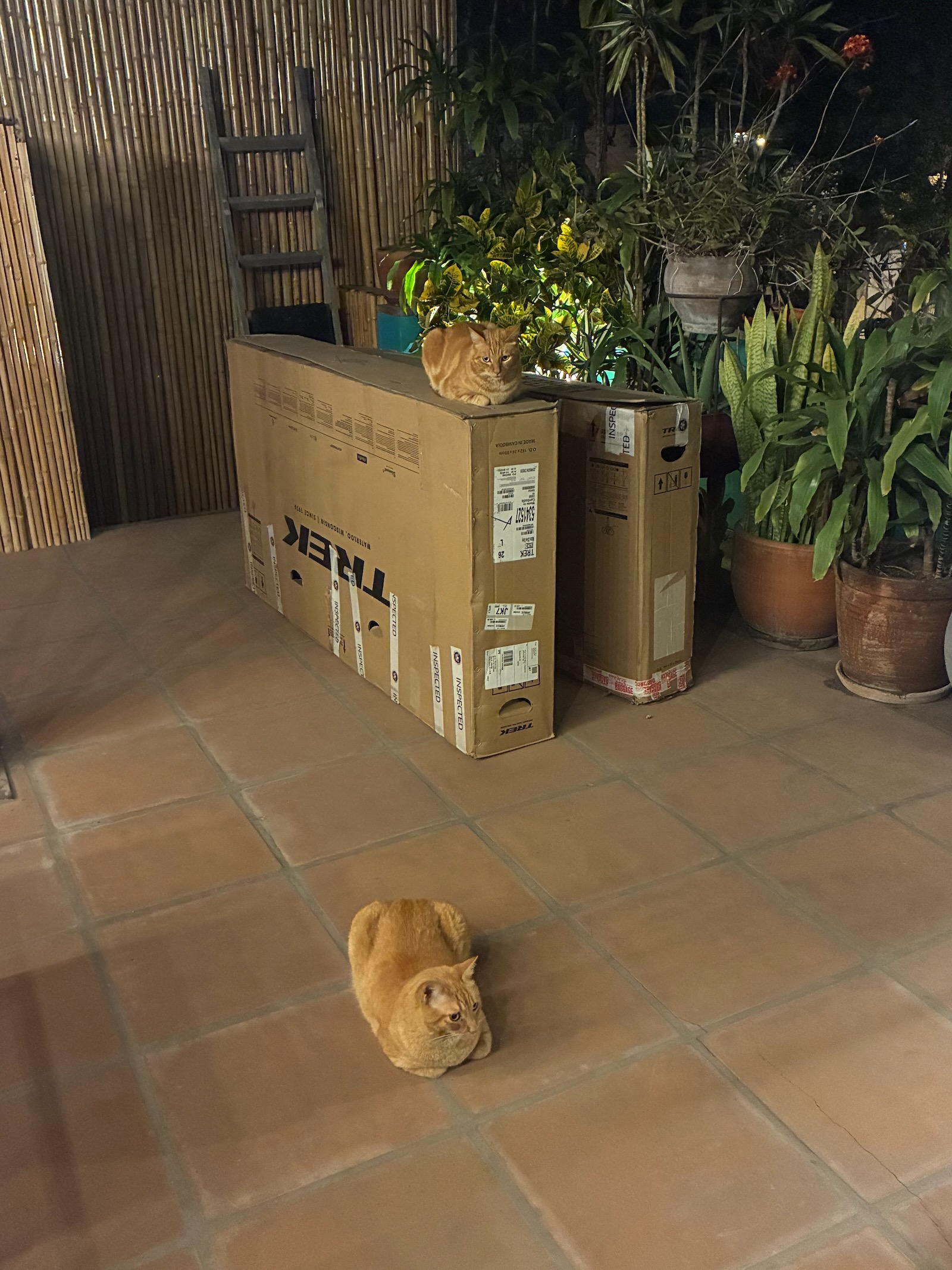
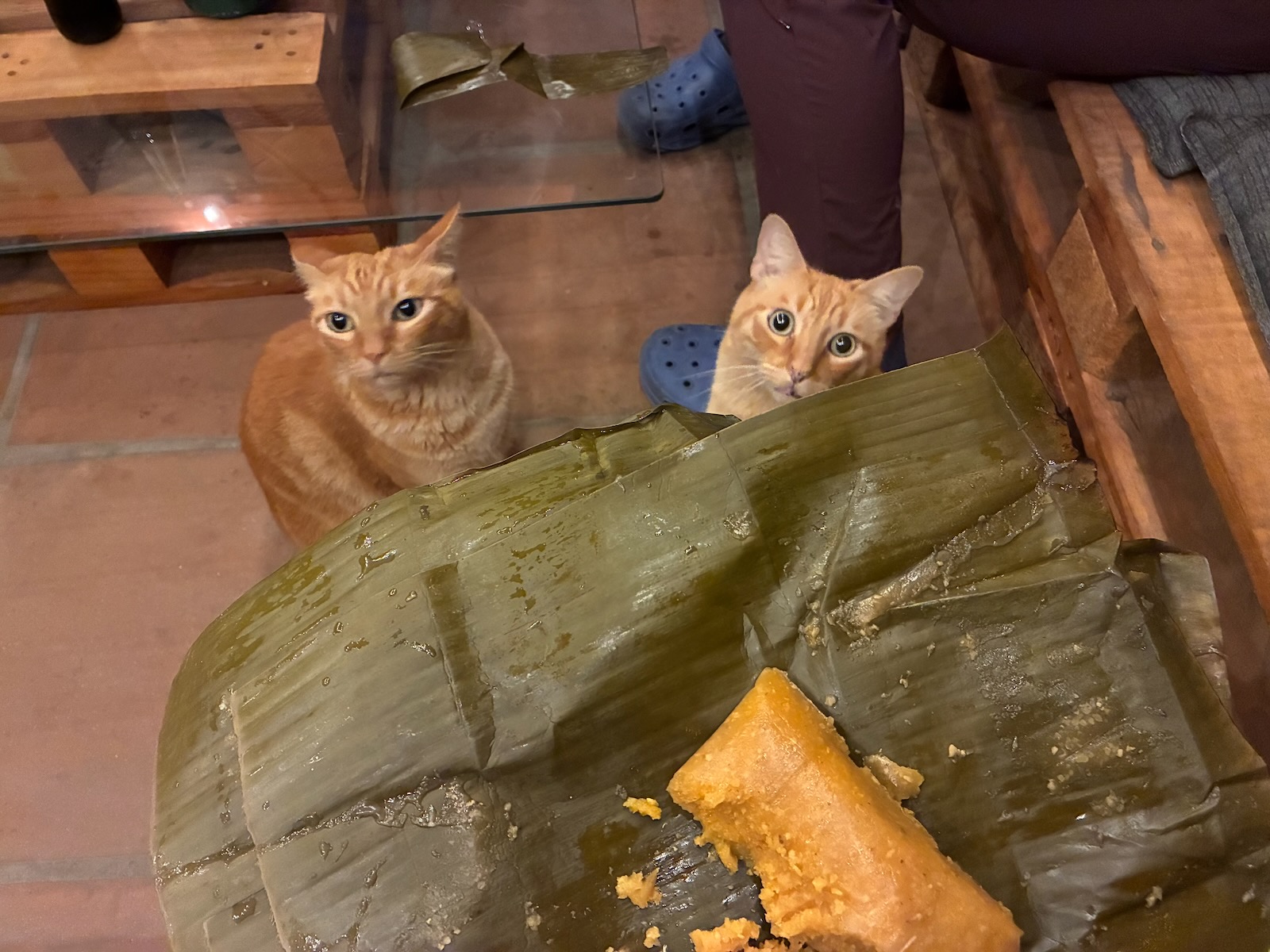
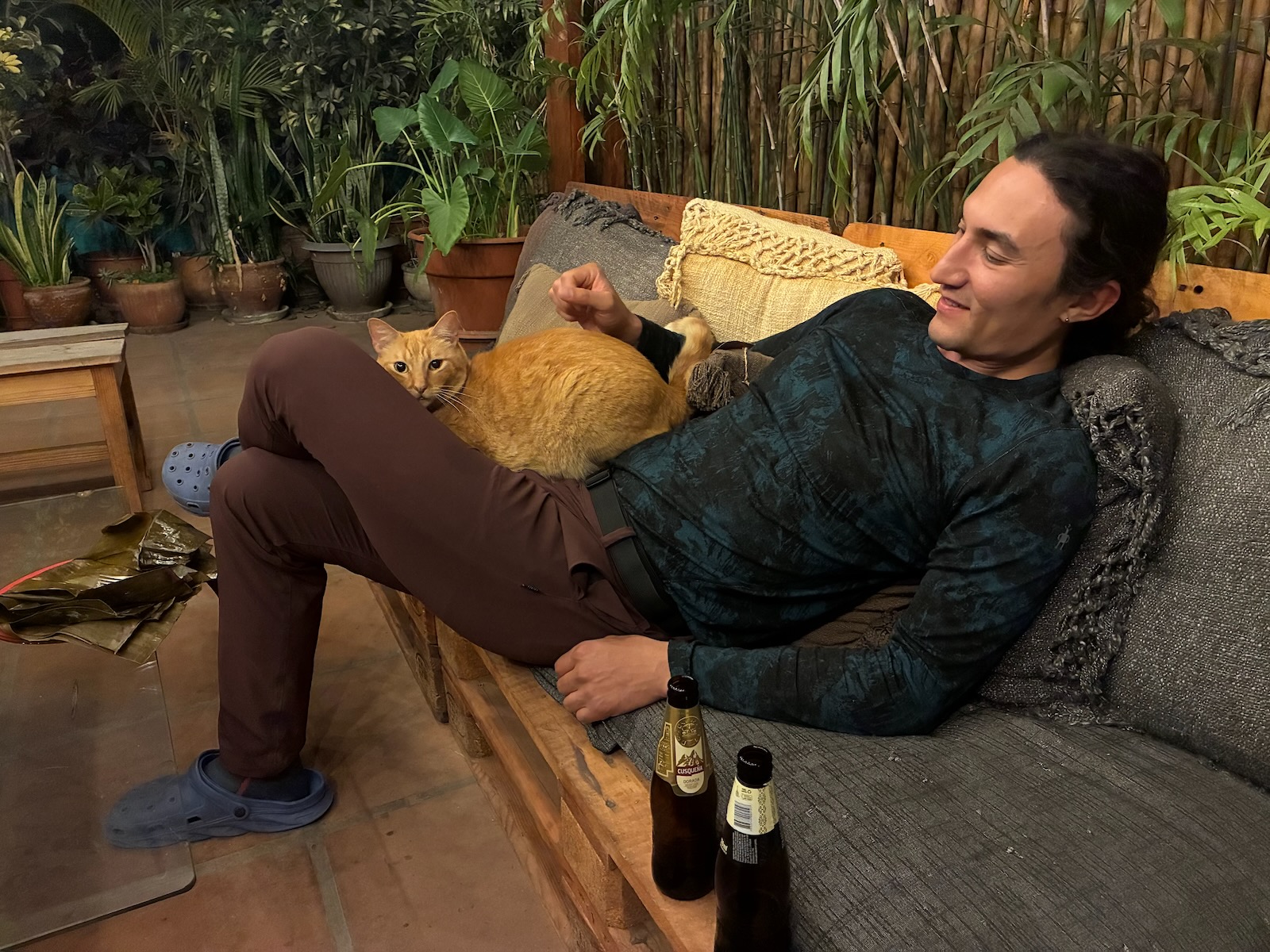
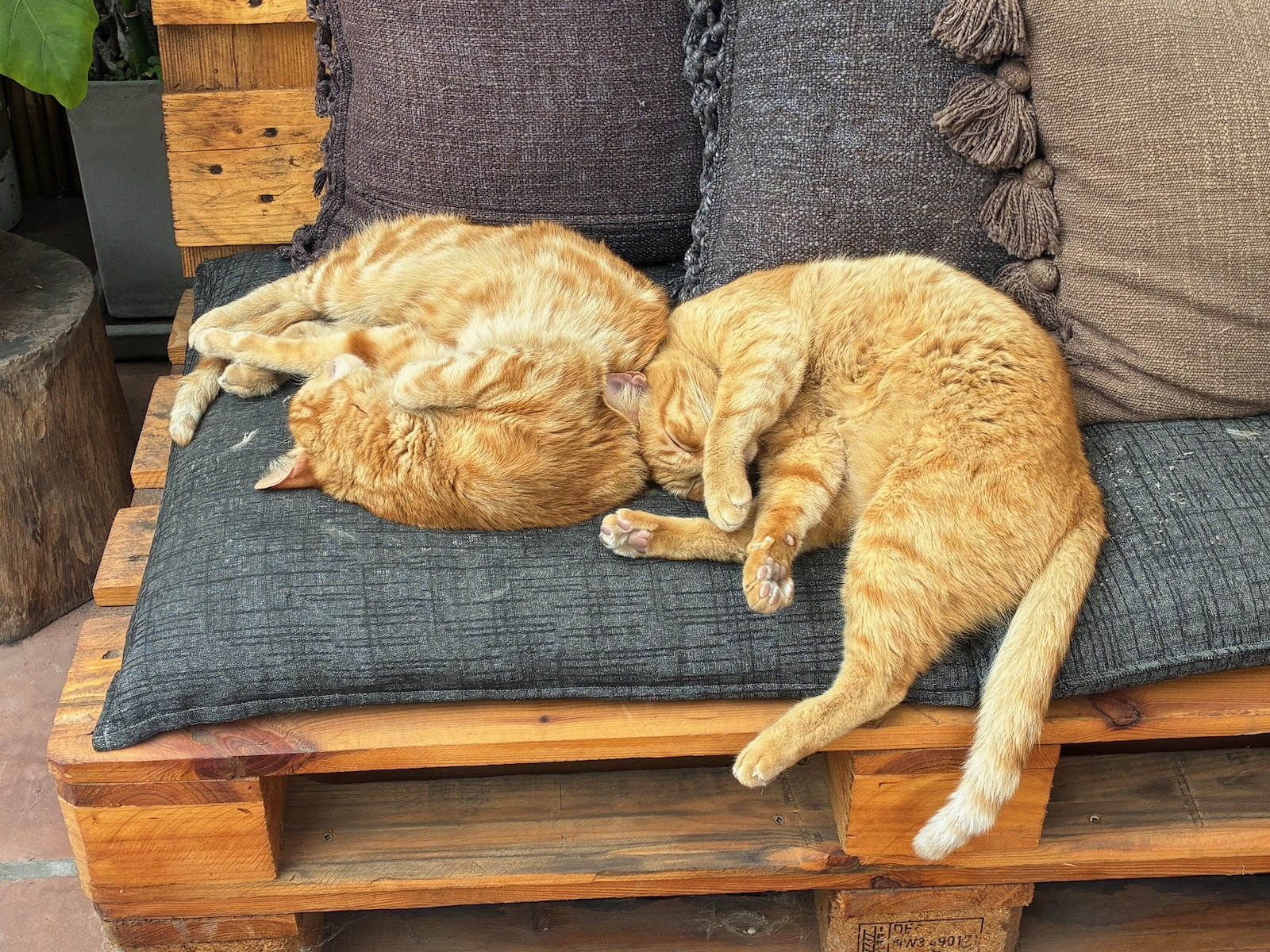
A few hours later we woke up and left to explore Lima. But not before admiring the terrace cats, Luna and Sol, two orange boys who are really more like dogs than cats, very food-motivated and very friendly. They were a very cute welcome crew to Lima and I took way too many pictures of them. The city is easy to navigate, chill, and clean, at least in the parts that we spent our time in, which admittedly are the nicest in the city. When we got on the night bus to Huaraz, the outskirts of the city revealed a very different reality. People say Lima is ugly, and after that bus ride I understood why. There’s more to Lima than Miraflores and Barrancos. It’s a huge city, a lot bigger than I thought it would be.
Over the next few days we’d spend time exploring the city and running various errands for the purposes of our trip. We spent a lot of time on public transit; we love taking the bus, and the experience was very user-friendly. Buses are regular and routes are posted on Google Maps. We also spent some time at our Airbnb, hanging out on the WiFi and doing online errands, like setting up our phones with local data plans, and buying the domain to host this blog. Over the course of one evening, we came up with a great game plan for the phones. Our phones are capable of having two eSIMs simultaneously active, meaning we could keep our US phone numbers and pay for a local data plan. This is really important for two-factor authentication in accessing some of our accounts while abroad, and for being on local networks that will have much more comprehensive service throughout the country. After a few hours of research, we decided which eSIM plan to buy. Carlos made the purchase and got a notification on his phone: “This device does not support this data plan”. We discovered that our phones were still carrier locked by T-Mobile, and therefore beholden to operating only on T-Mobile’s network, which would pose a huge problem for us.
You can skip reading the following, it may bore you, but I wish to outline exactly why T-Mobile’s international phone policy can be read as a larger symbol of why Americans don’t travel for more extended periods of time. Everything about how our society works is built to make us stay in the United States. I am not expressing an opinion about whether this is good or bad, but rather trying to outline why the extended travel we planned is so incredibly abnormal and inaccessible to the average American. Of course, the obvious reason is health care. But there are other reasons too, like phone plans. T-Mobile offers an incredible international phone plan for most Americans. You can have up to 60 days of international phone service on T-Mobile networks included free of charge with your regular plan, in basically every country on earth, except a few. If you travel a few weeks a year, this is perfect and hassle-free. Carlos and I are part of his family’s plan, and it’s a really good deal. We even got “free” iPhones with T-Mobile last year. But when we decided to plan for extended travel, we realized that cancelling this phone plan wasn’t going to be realistic. We’d need to keep paying for our phones for the duration of our travel, otherwise we’d have to buy a completely new plan upon return for an undoubtedly higher price. Additionally, without our US phone numbers, we’d have no way of satisfying two-factor authentication abroad and could risk being locked out of our accounts. We knew about the dual eSIM capacity on our phones, and figured we’d buy local eSIMs and pay for those while traveling. But when we discovered that our phones were still carrier locked, we looked into buying an international plan with T-Mobile. Incredibly, T-Mobile simply won’t allow you to use their international networks for longer than 60 days, even if you buy a dedicated international phone plan with them. If you are abroad and using T-Mobile’s networks for more than 60 days, you will accrue penalty fees. And why were our phones carrier locked? Well, when we got them for “free”, we actually bought into a two-year carrier-locked plan, whereby we’d pay off part of the phone each month and T-Mobile would apply a monthly discount for that amount. Carlos was actually forced to upgrade from his iPhone 6s to an iPhone 16, because T-Mobile isn’t supporting 3G networks anymore. I was jealous of his fancy new phone and so I switched from AT&T to T-Mobile for a similar “free phone” promotion. Carlos and I discovered, while in Lima, that we were apparently “paying off” our phones, and that we each had around a $200 balance left. Without paying them off, there is no way that we’d be able to use a local phone plan. Carlos began referring to this situation as a “ransom”. He’s paid the ransom for his phone, and I may yet do the same, but WiFi is working okay for me for now.
These kinds of things make me wonder if any of this was a good idea. To top it all off, we’d been dealing with diarrhea too. I spent my third day in Lima pretty much glued to the Airbnb toilet. I spent a lot of time asking myself, “is this worth it?” “Are we stupid?” “Shouldn’t we have known this or that?” "Should we just go home?" But alongside these rather large bumps in the road, we experienced a richness and beauty that defies words in our first few days in Perú. I’ll try anyways.
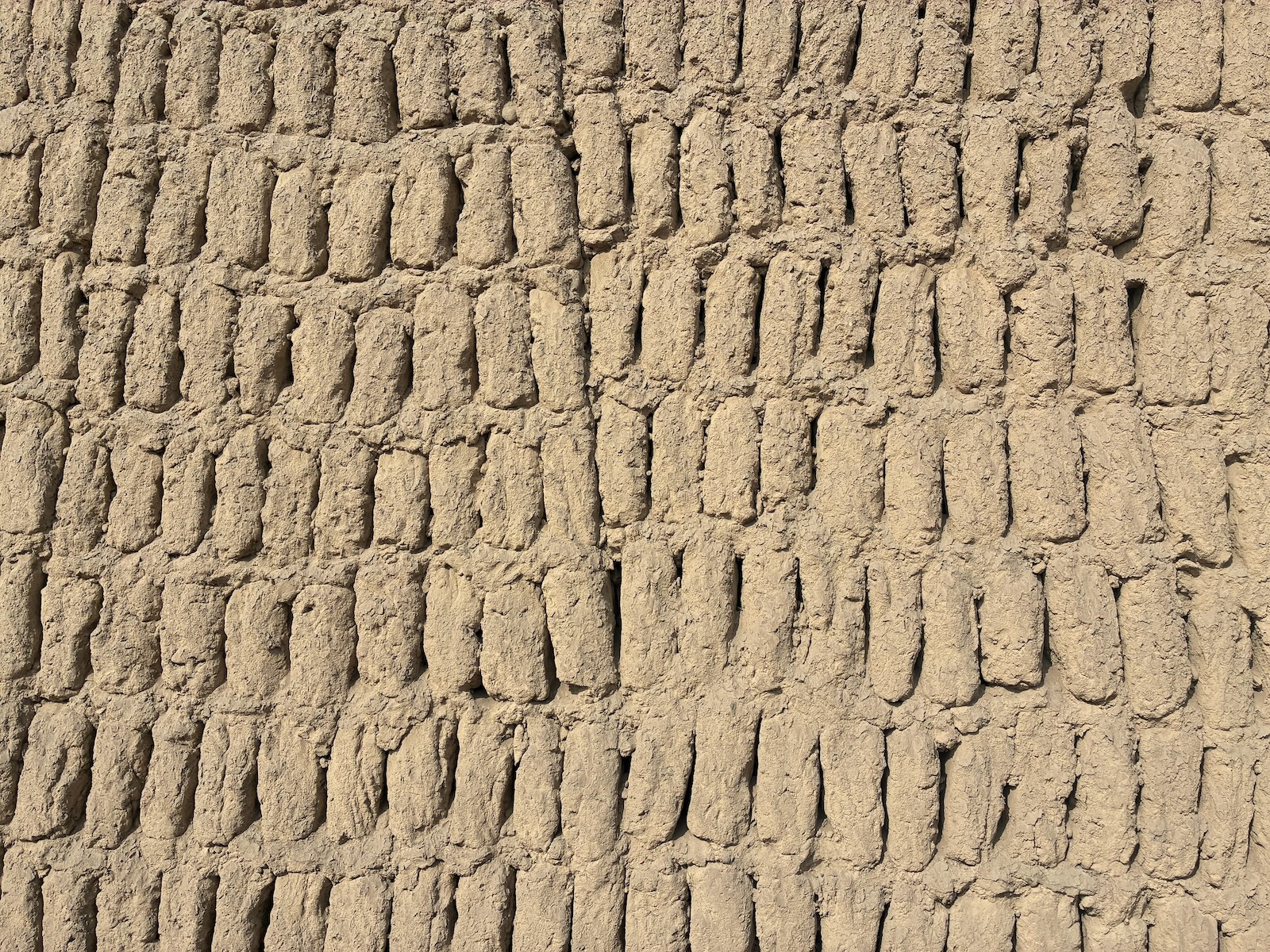
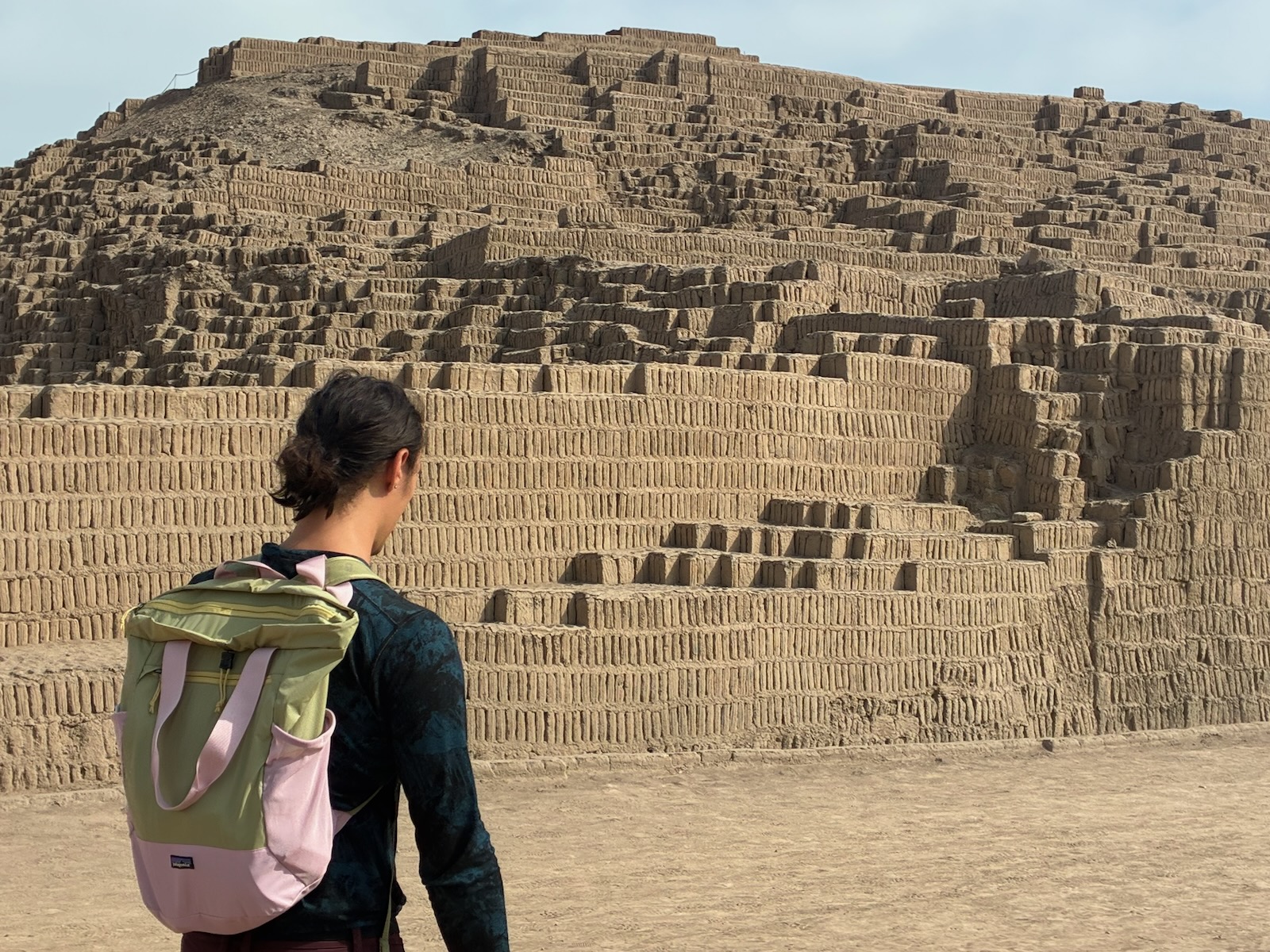
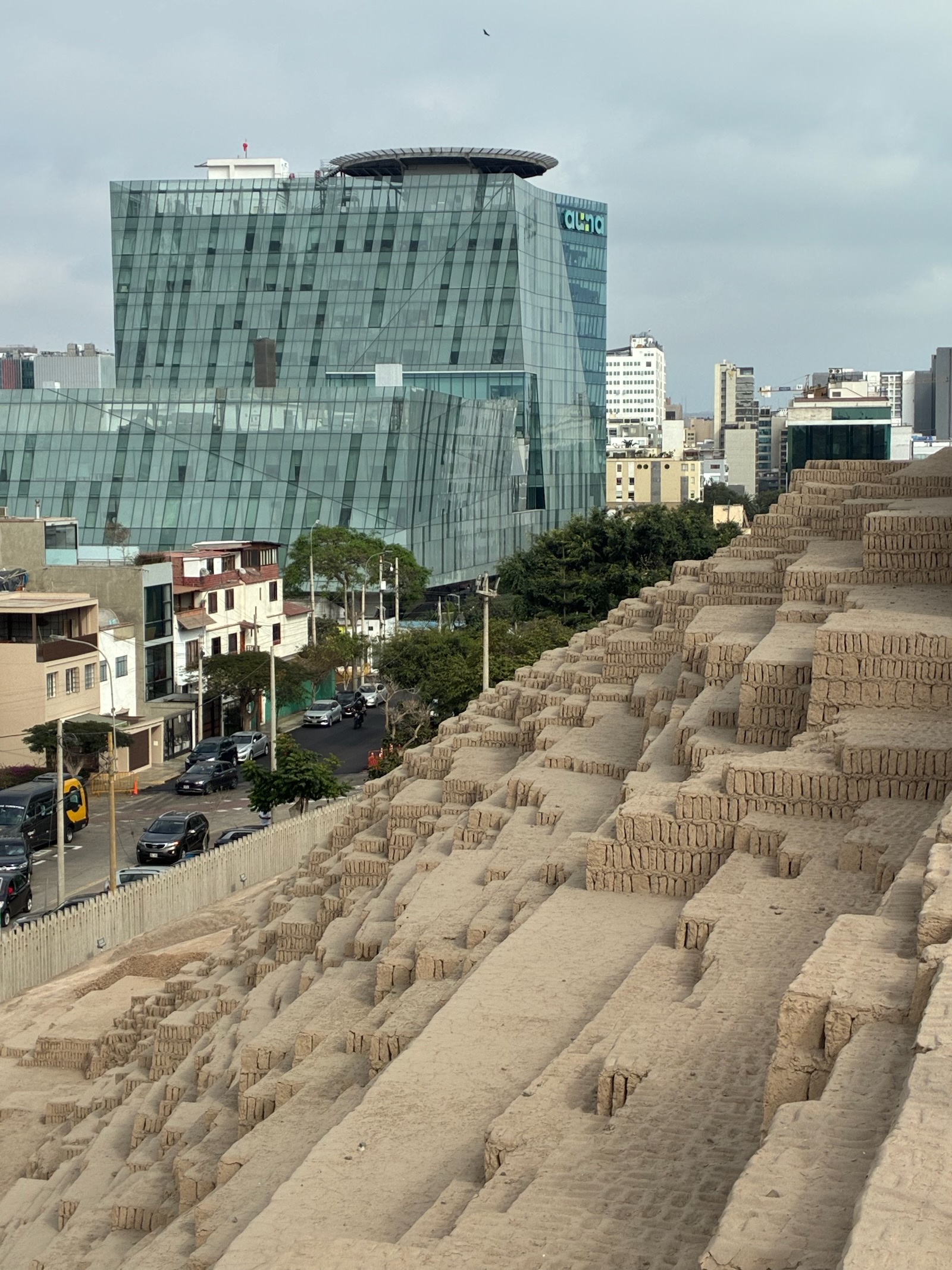
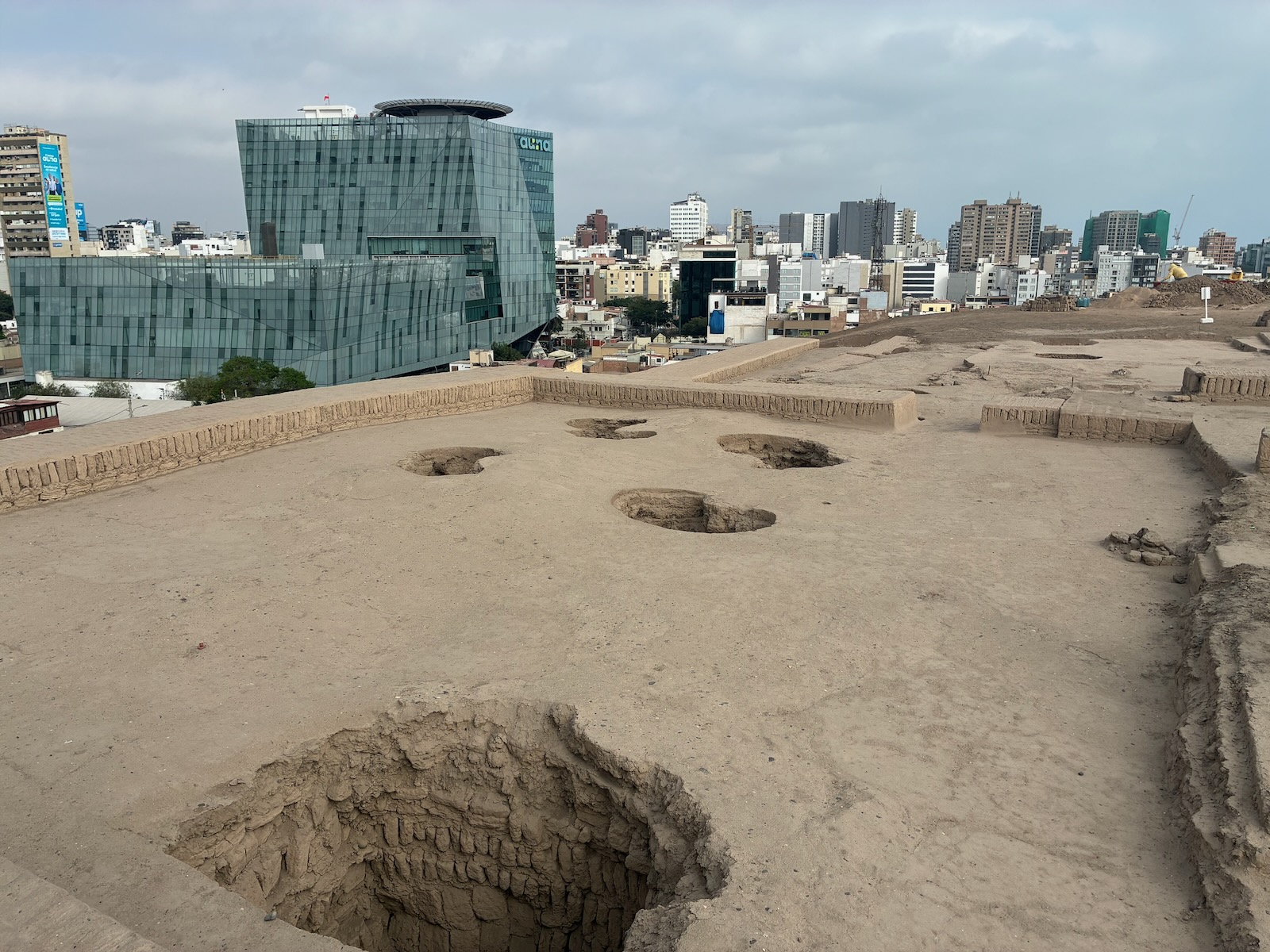
The highlights of our four days in Lima were visiting Huaca Pucllana, Museo Larco, and La Tarumba. Huaca Pucllana is an 1800 year old archaeological ruin in the middle of the city, built before the Inca empire. In fact, none of the archaeological artifacts we saw in Lima were Inca, but rather from much older, coastal empires. Huaca Pucllana was built by the Lima, and later inhabited by the Yschma and Wari civilizations. The ruins are a six-level pyramid standing in the middle of a modern city; it’s mind-time bending, like Mexico was. Also like Mexico, the pre-Hispanic people of this part of the world built monuments that could withstand major seismic activity. The library book-like brick pattern of Huaca Pucllana served this function. Archaeologists infer that Huaca Pucllana was a major sacred ritual site, as well as a burial ground for the Wari. We saw holes in the pyramid from which Wari mummies were excavated.
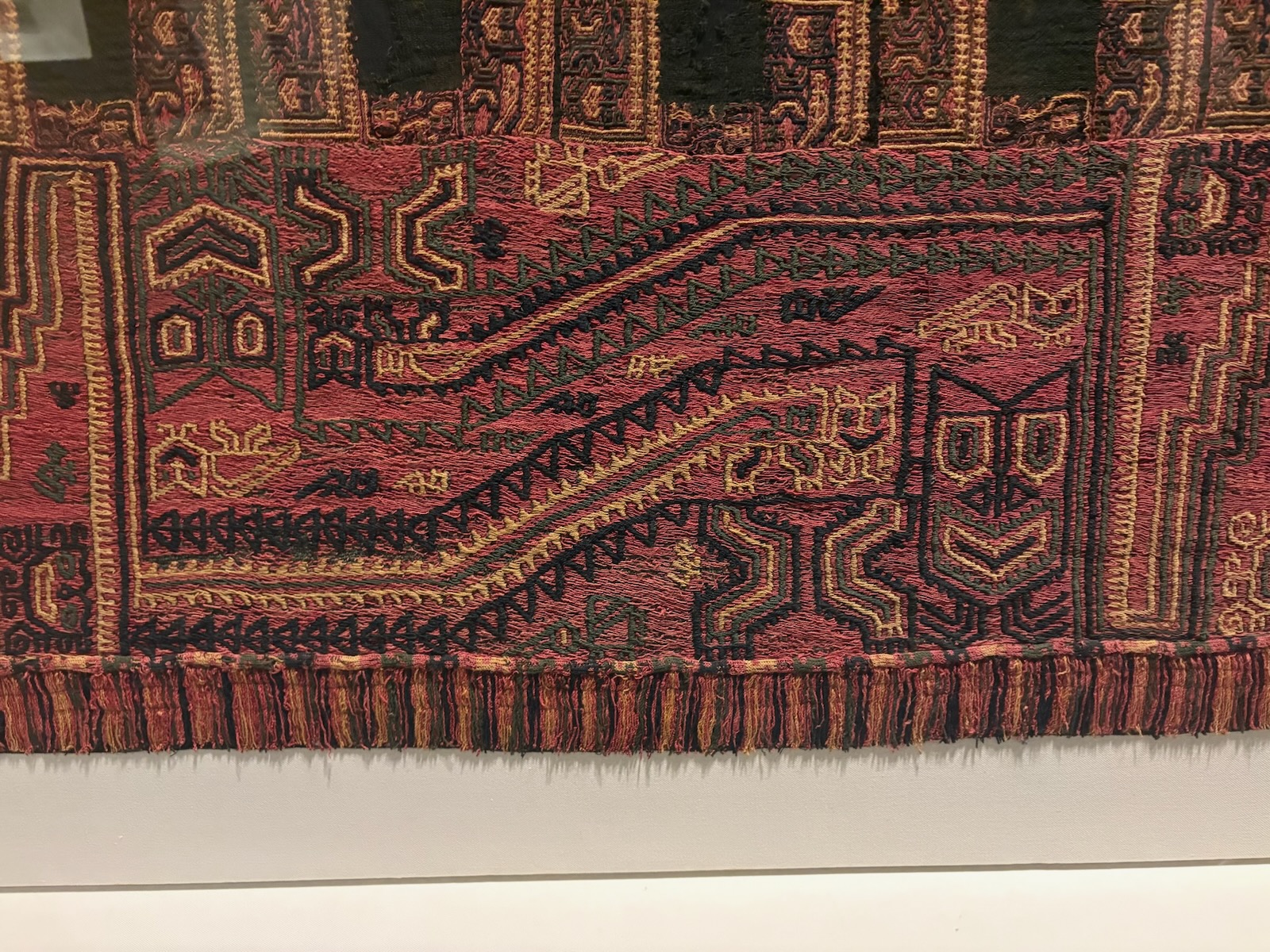
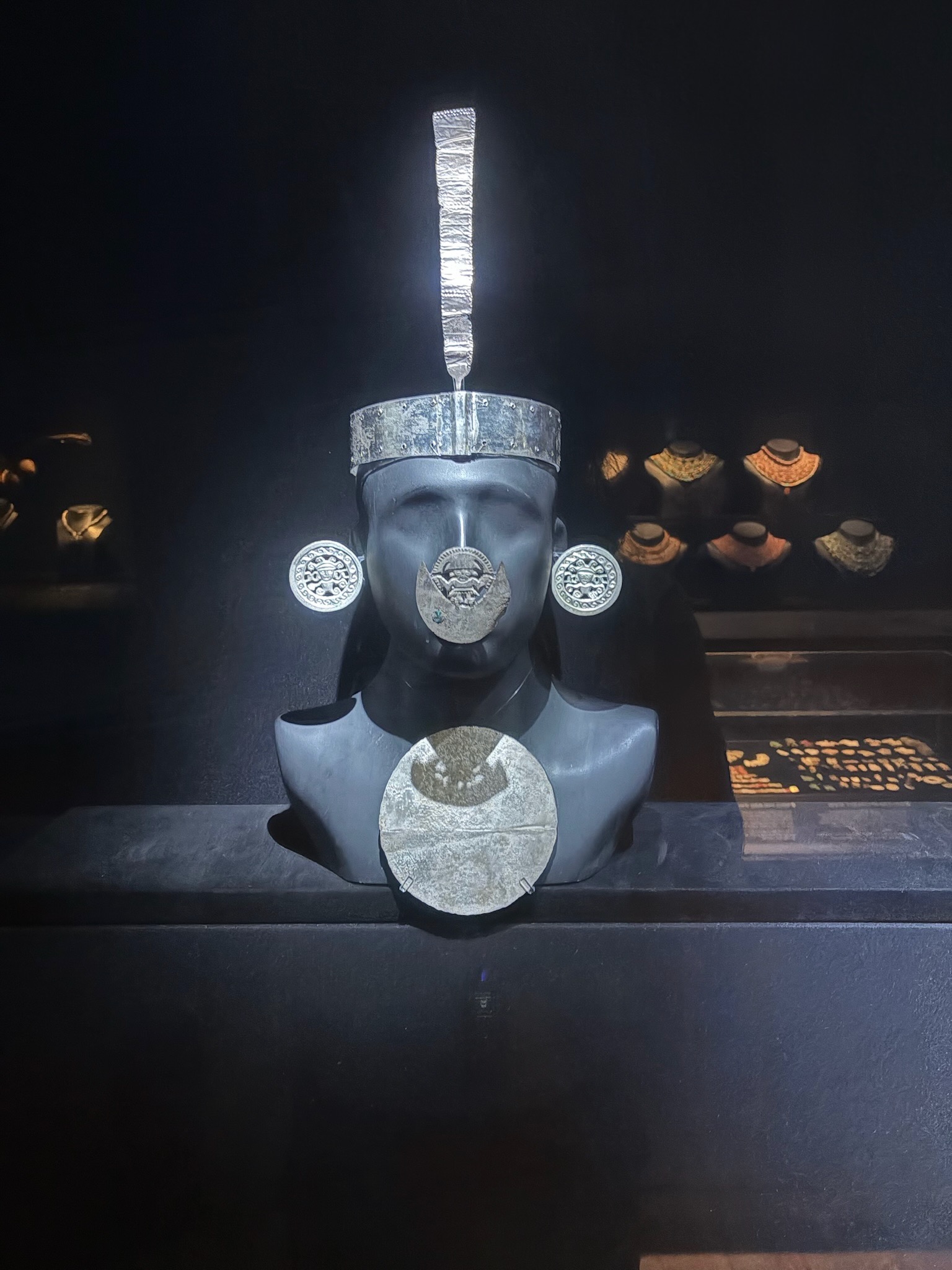
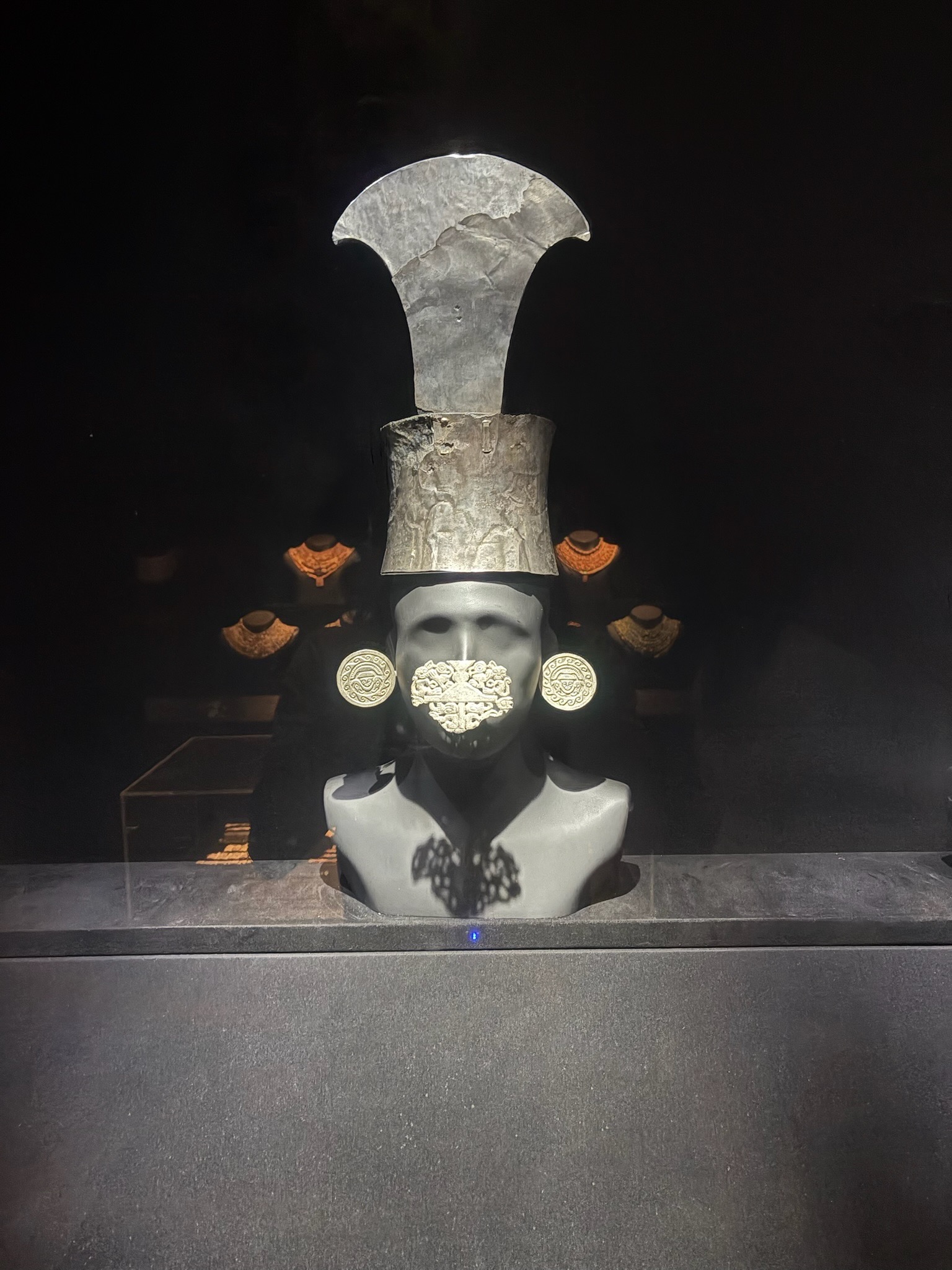
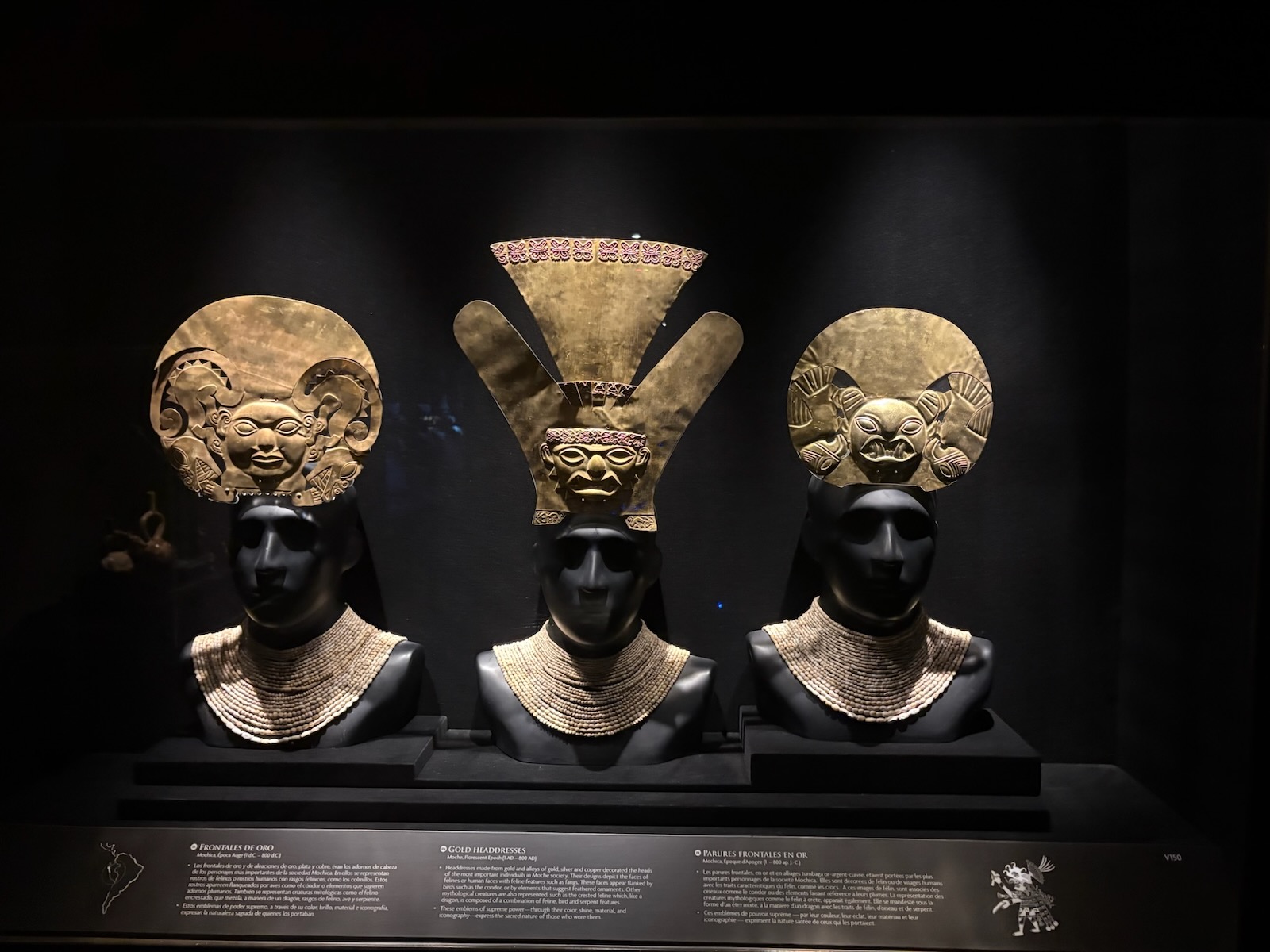
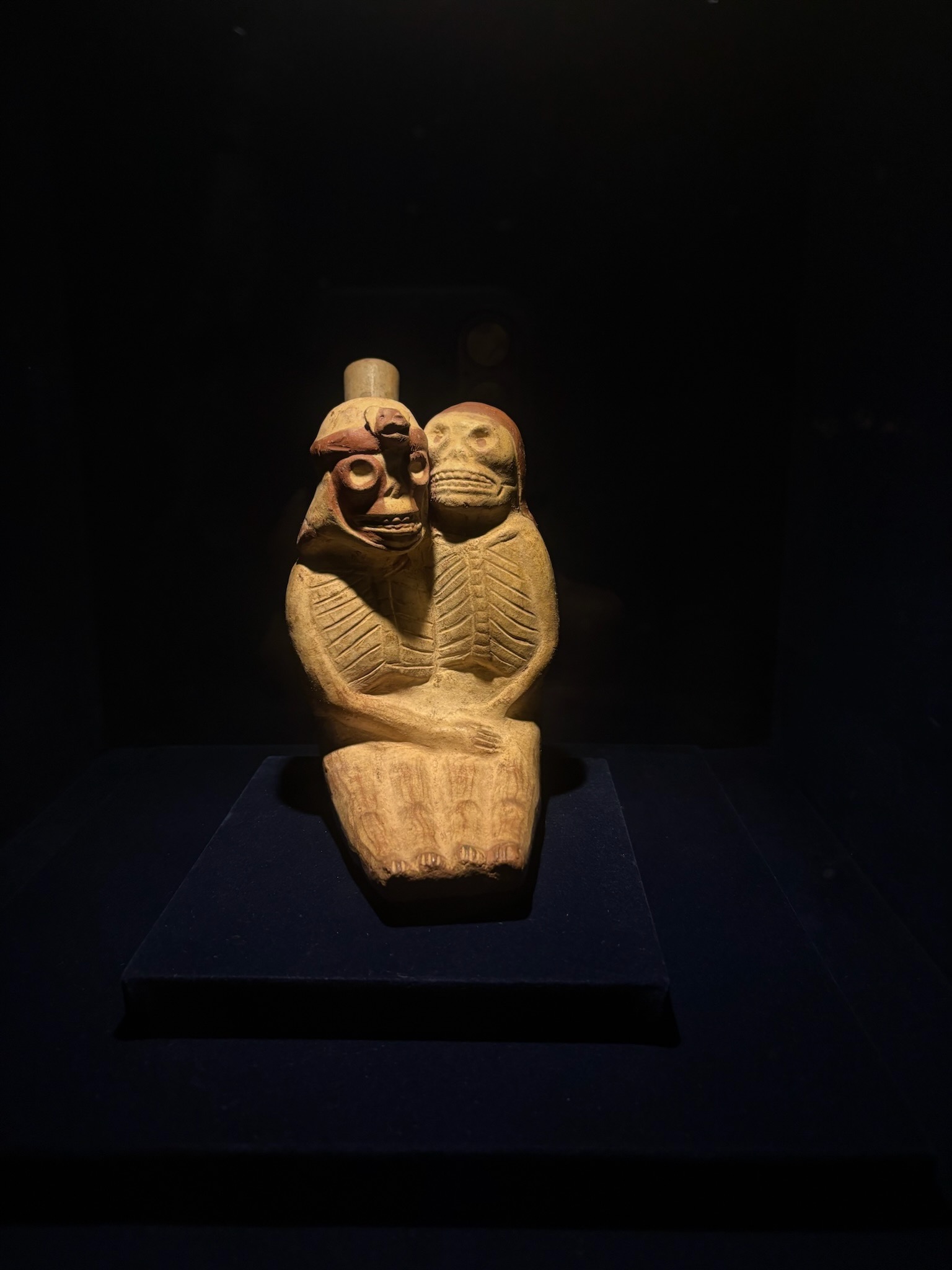
On day two in Lima we visited Museo Larco, which houses artifacts from the Lima, Nasca, Moche, Paracas, and Lambayeque cultures, among others I may have forgotten. This was where I really began to feel like a small fish in a vast ocean of reality. I was so overwhelmed by the magnitude of what our tour guide said and the mythology behind the artifacts in front of us that I didn’t take a single picture (but Carlos did). We saw mind-blowing pottery, almost all bottles, ceremonial drinking vessels, many of them buried with people for use in the afterlife. These bottles were in the forms of men, women, skeletons, frogs, mushrooms, genitalia, gods, dogs, jaguars, eagles, snakes, and some of them contained all of the above. Some were in the shape of multiple figures, some were painted with elaborate mythological scenes. These bottles told the origin stories of whole civilizations, the story of the origin of life on earth, the story of what happens to us when we die, the story of the underworld, the story of the upperworld, the story of the middleworld. We saw a burial shroud that was excavated from a tomb and one of four shrouds wrapped around a royal mummy. This burial shroud took more than twenty years to make, meaning that preparation for death of a royal began long before they died. This burial shroud showed the same design of a god, part snake, jaguar, and eagle, repeating its form above and below, within and without, over and over. It was looking at gods within gods within gods. The god was embroidered within itself up to four times, mirrored below, and repeated in stripes. We saw a fully intact excavated Wari mummy, of a child around five years old, that died of hydrocephalus and therefore had an abnormally large head. This information was known because the museum had done an x-ray of the mummy; they never unwrapped the body. Wari mummies were put to rest in the fetal position, wrapped in multiple burial shrouds, tied with ropes, and the whole bundle was dressed as a person. This particular bundle had a decorative head on top with real human hair and a golden mask over its face, and was wearing a colorful knit garment. We saw Moche jewelry, masters of metallurgy, crowns a foot high, ear gauges three inches thick, and nose pieces that were designed to cover the speaker’s mouth and even jingle when they spoke, so that the speaker could be seen as less human-like and more god-like. I kept telling myself, “it’s the ocean, remember how to swim.”
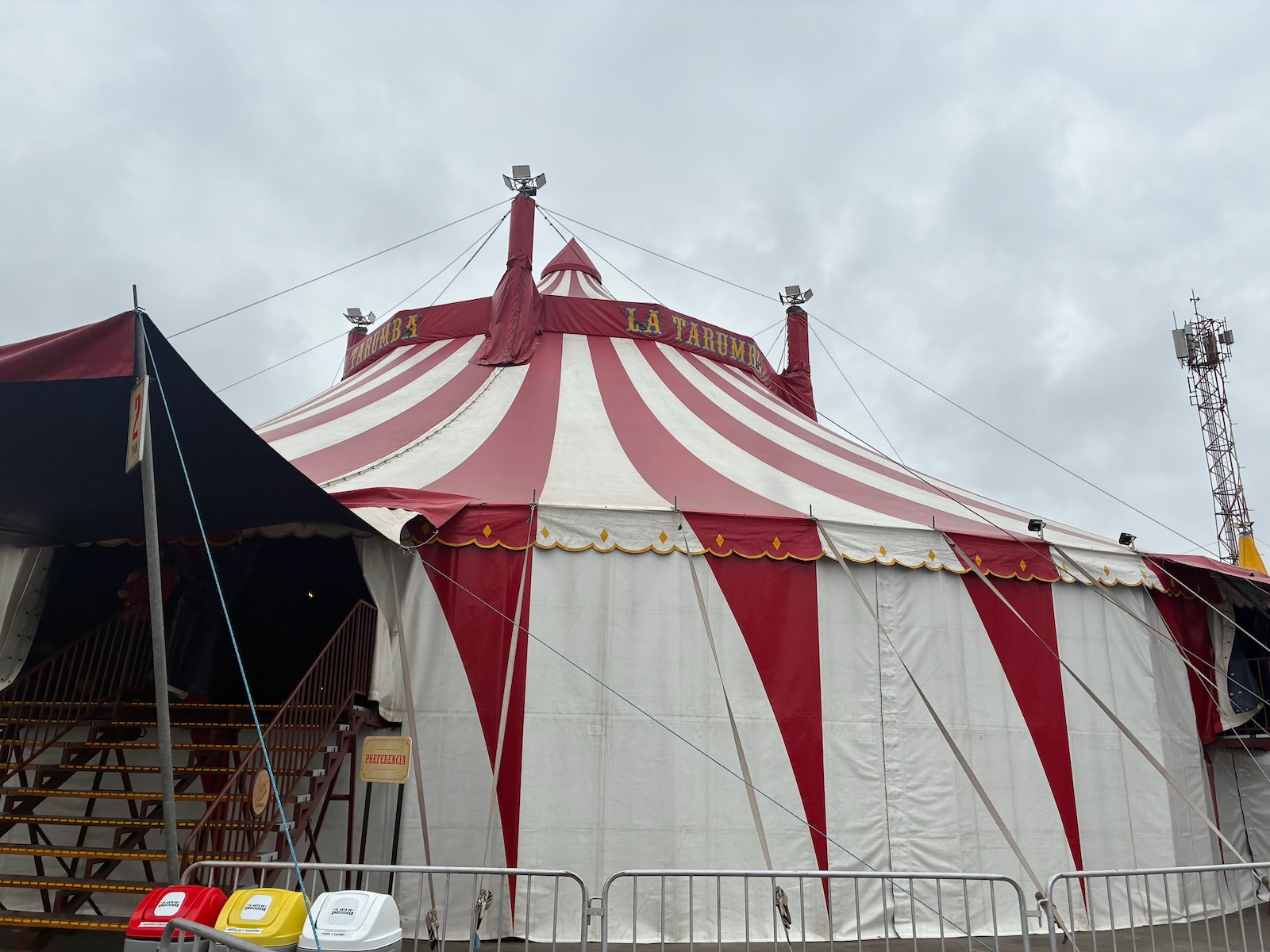
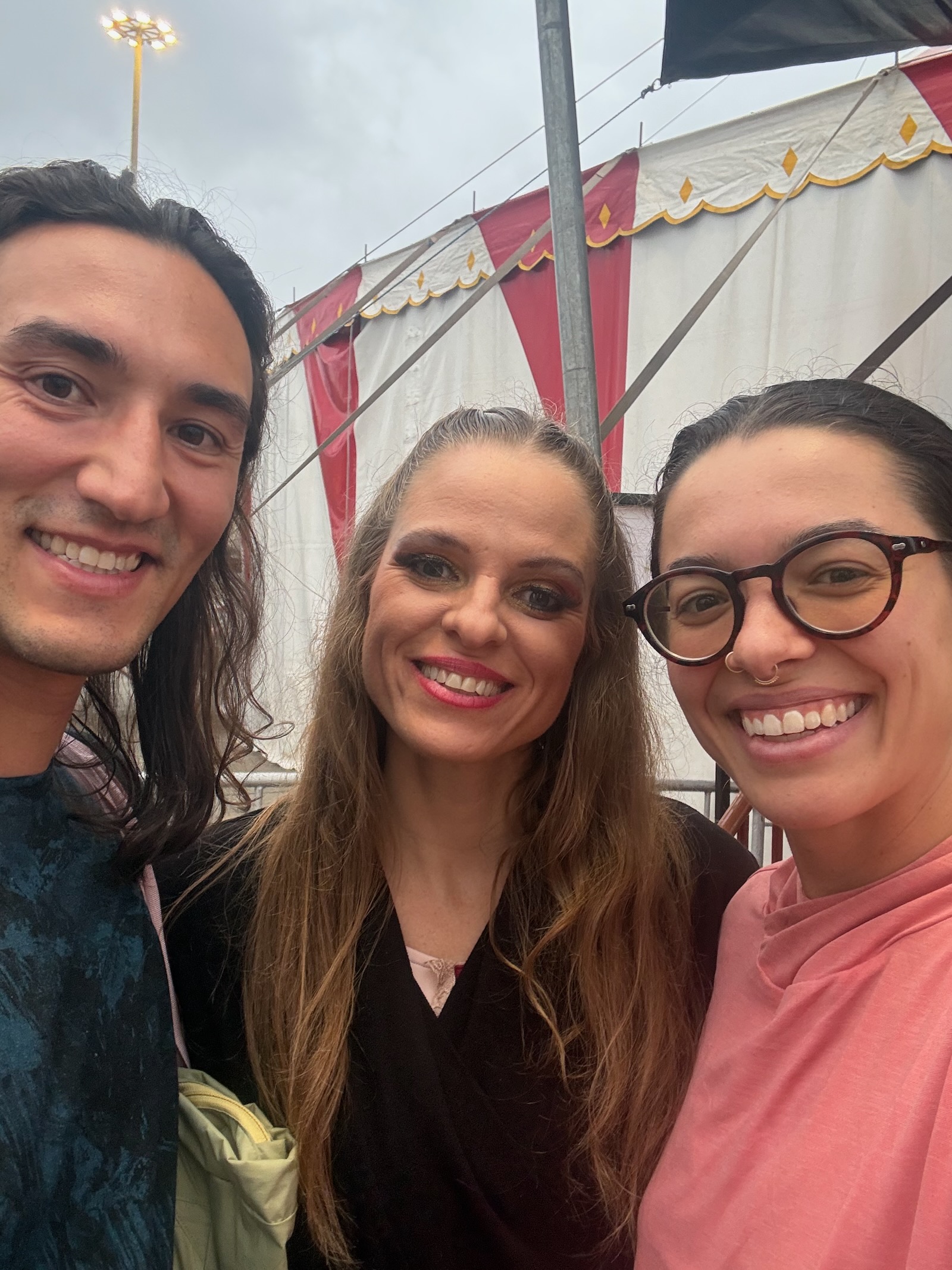
On our last day in Lima, we went to La Tarumba, a circus. Our Airbnb host, Stephanie, is a circus performer and invited us to her show. I thought we were going because we had no plans and nothing better to do, and that this would be something rather trivial. How delightfully wrong I was. From Stephanie:
“Airosa is the name of the show. Airosa is a contemporary circus show inspired by the paintings of Pancho Fierro, a 19th century Peruvian watercolor artist. Fierro is famous for documenting everyday life in Lima during the early years of Peru’s Republic. Instead of painting kings or generals, he painted ordinary people—street vendors, musicians, dancers, workers, market scenes, festivals, and the famous tapadas limeñas (women that covered themselves). His paintings are like a visual record of Peruvian culture before photography became common. The show imagines that the people from Pancho Fierro’s paintings come to life. Through acrobatics, live music, theater, and humor, it recreates the atmosphere of old Lima. The story follows a young street sweeper who discovers her own strength and dignity while meeting these colorful characters from Peru’s past. It’s both a celebration of Peruvian identity and a tribute to the everyday people whose work often goes unnoticed.”
I hadn’t yet received this description of the show from Stephanie, so I was making my own observations. The layout was a traditional circus ring, seats on almost all sides, except the stage which was a two-story set made to look like a city building. On the first floor of the stage were doors through which performers came out into the ring, and on the balcony above was a live band and the ring master, who looked like Pancho Fierro. The seats around the ring were packed. Not a completely full house, but very close. Grandmothers with grandchildren and everyone in between. The show opened with a single woman under a spotlight, clad in a yellow work suit, sweeping the streets. On the stage were the other performers, elaborately dressed in the style of old Lima, but frozen in time. The music was slow as she explored her street, her home, and gradually discovered these strange frozen people. She began to clean them as if they were statues, dusting them off one by one, until her feather duster tickled a man’s nose and made him sneeze. The big BANG. Suddenly the music blasted into intense, colorful, Afro-Peruvian beat, and the whole cast came to life, dancing, flooding the ring with movement and life. It brought me to tears. The memory of that moment still makes me cry. That moment was a cosmic symbol of awakening. We come into the world as babies, and if we’re fortunate we become children, then adults, and we are shaken awake to illusion again and again and again. Unexpected, unbelievable chapters unfold and we’re taken, up or down, beyond what is “real”. Things we thought impossible became possible and things we thought were certain, solid as rock, melted away like water. What is the point of the circus? To be entertained? Or is it to act out how absurd our life here on earth is and play with that absurdity?
I have some dear friends at home that practice the circus arts. It is truly a privilege and joy to know them and watch them perform. As I sat in the circus tent, crying, I remembered them and felt close to them, with perhaps a deeper understanding of what it is they’re doing when they flow. Or you know, maybe they just do it for the aesthetic.