A weird pink spot - Laos
November 19, 2026
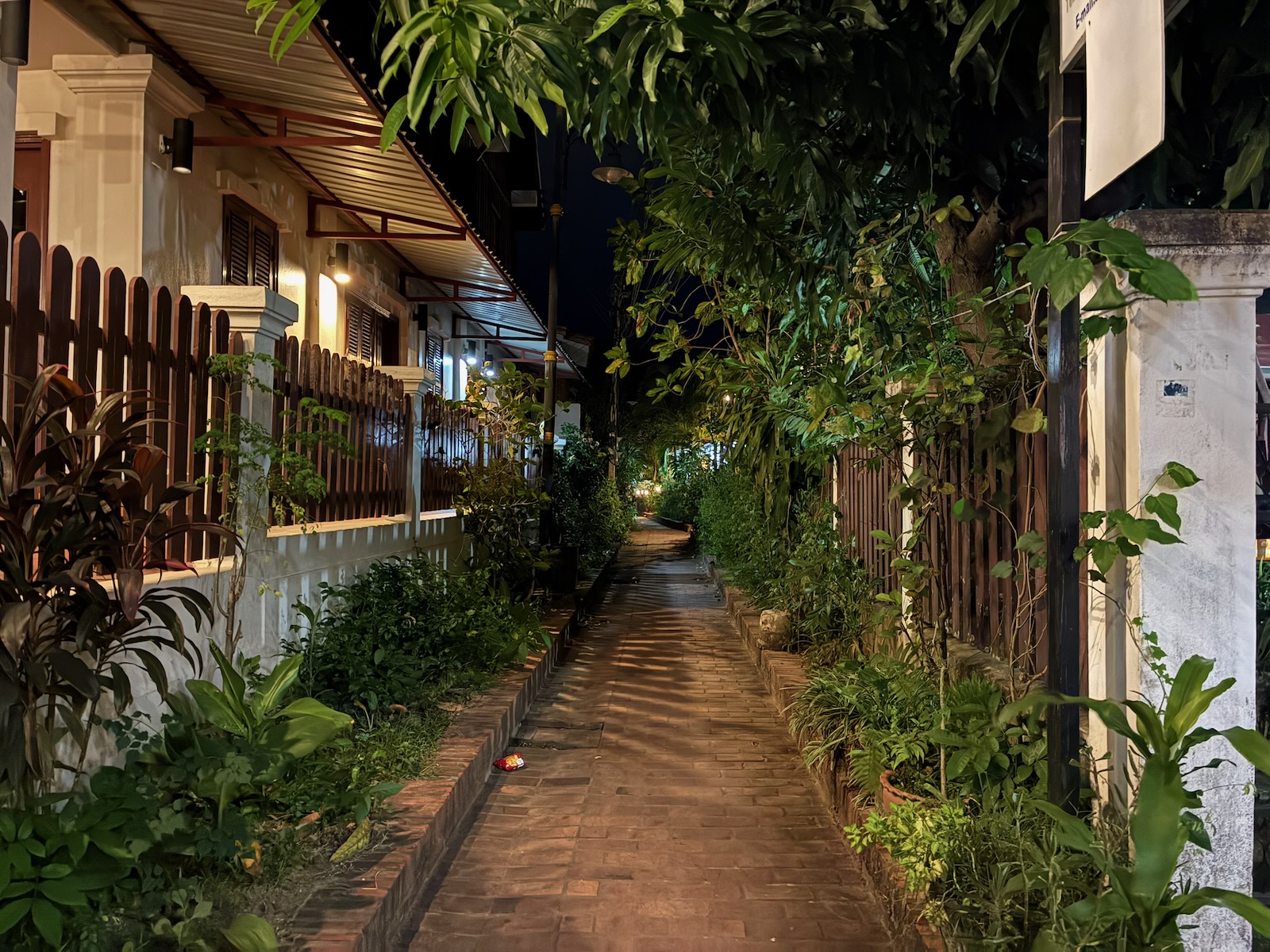
I kind of wrote this blog post to Joe one day. We had just arrived to Luang Prabang and Carlos asked Joe if he had any recommendations on “what to do”, since he’d visited before. He replied that he had visited nineteen years ago and that he had no recommendations to give, because he spent his time wandering around the city. He flâneured.
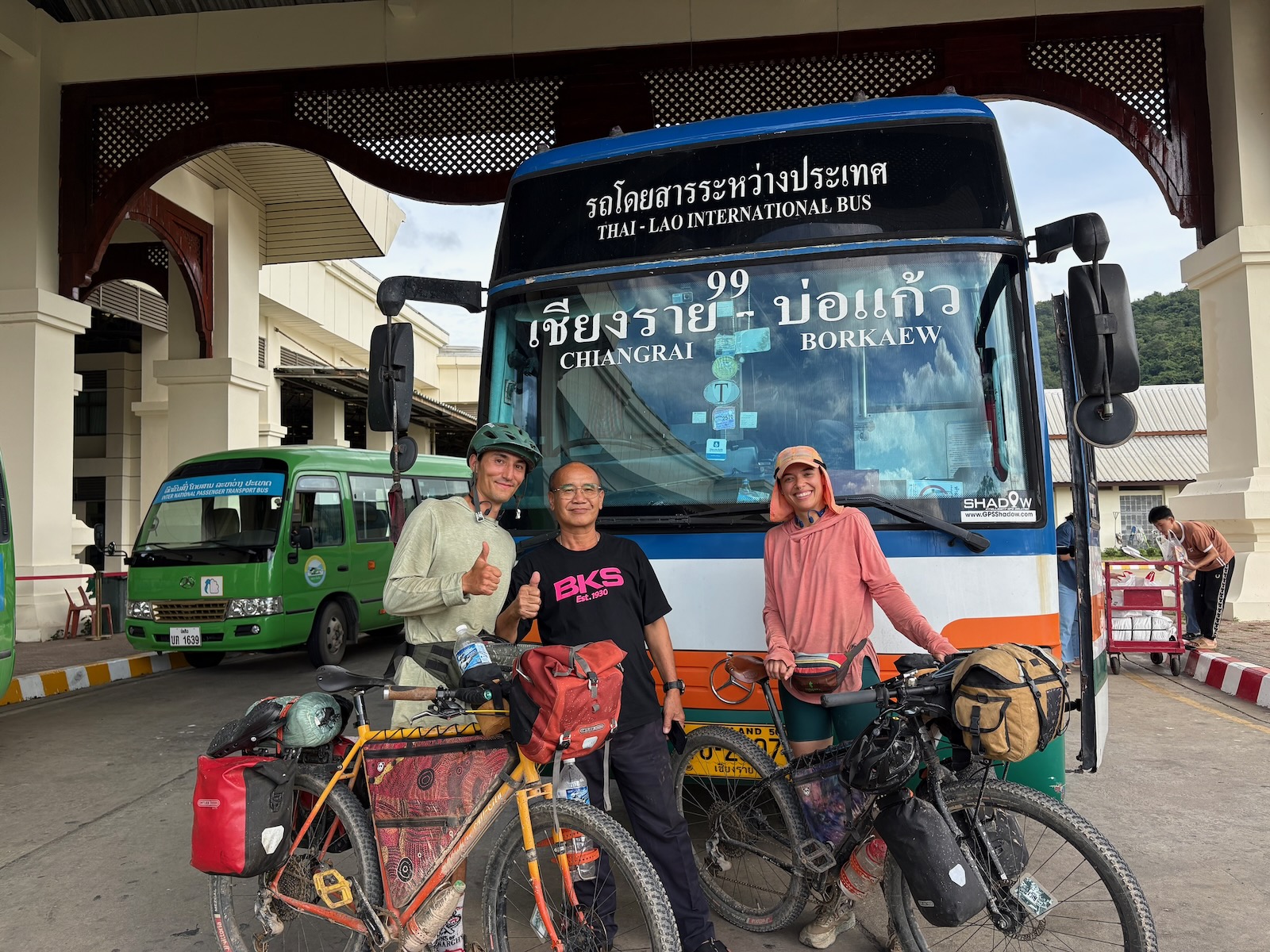
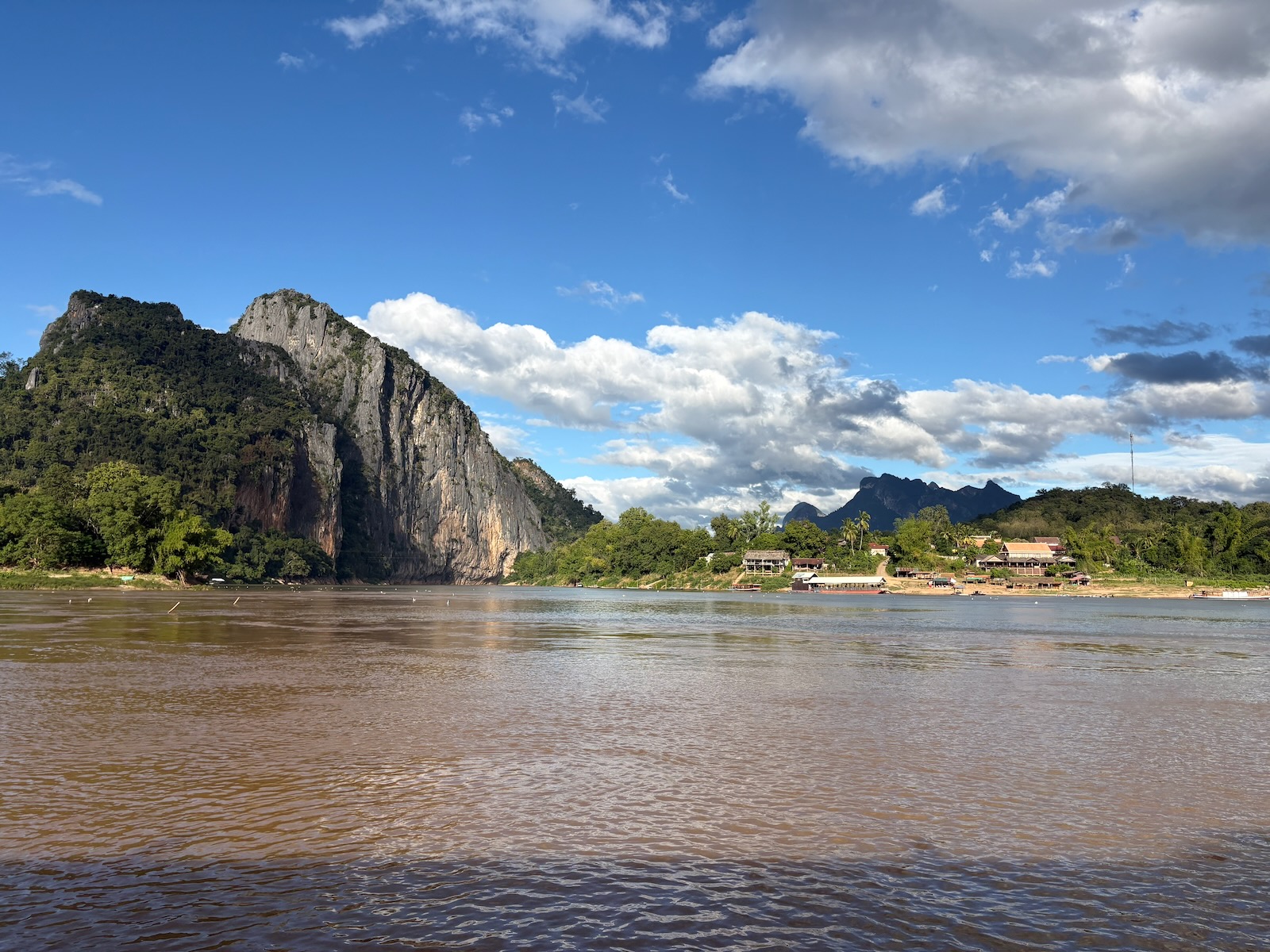
We got to Luang Prabang after Part II of our cycling journey in Southeast Asia. Part I was the Lanna Kingdom route, a loop through Northern Thailand leaving from and returning to Chiang Mai. Part II was cycling from Chiang Mai to Houayxay, Laos. We cycled four days total, to Chiang Dao, then Fang, then Chiang Rai (where we stopped for two days), then we crossed the border into Laos and stayed in Houayxay. From Houayxay, we took a 2-day “slow boat” to Luang Prabang on the Mekong River. Laos is very mountainous and bikes are even slower than a “slow boat”, so we thought floating down the Mekong in a public Lao boat would offer a nice rest period before the riding the rest of the way to Vietnam.
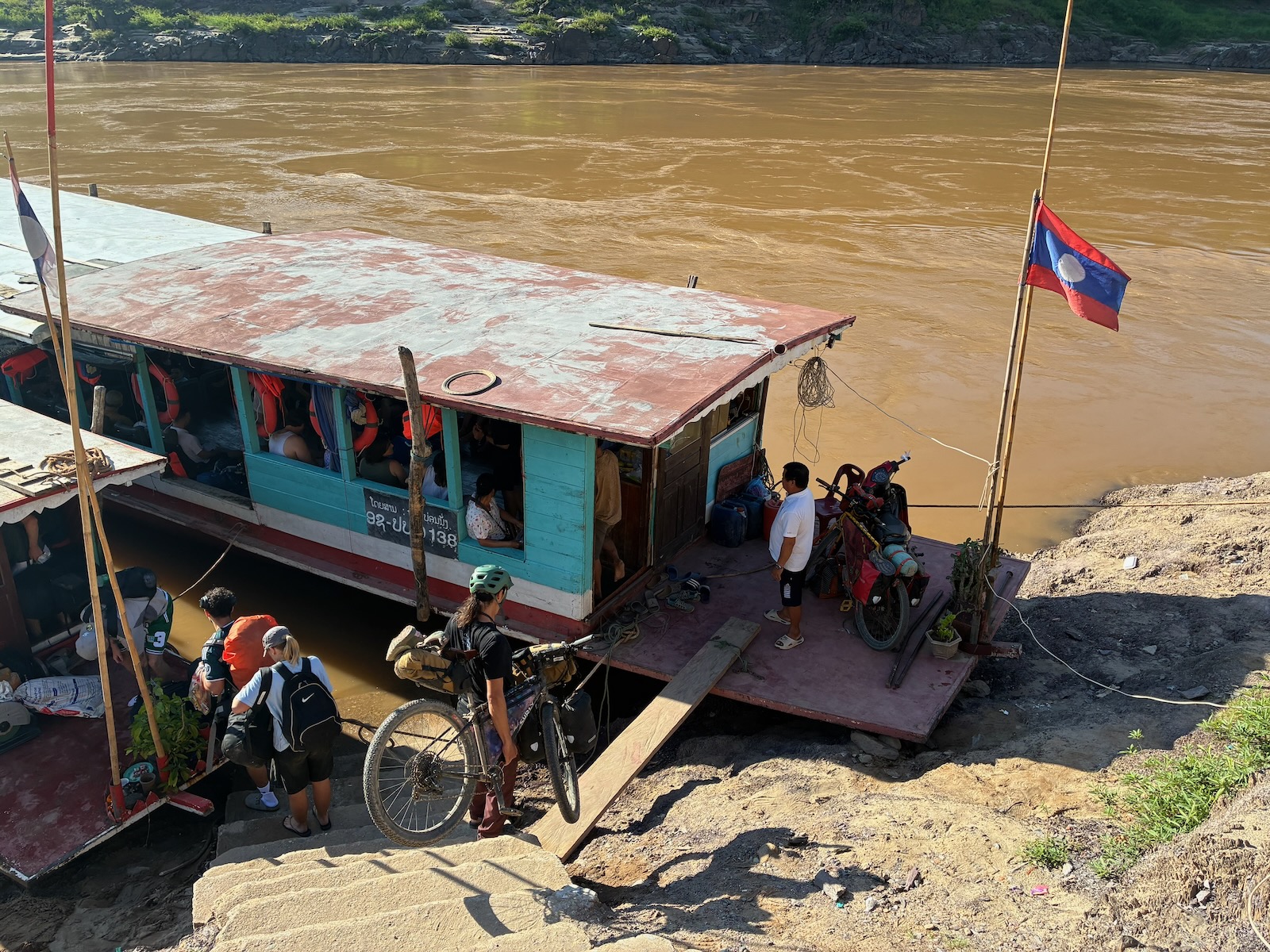
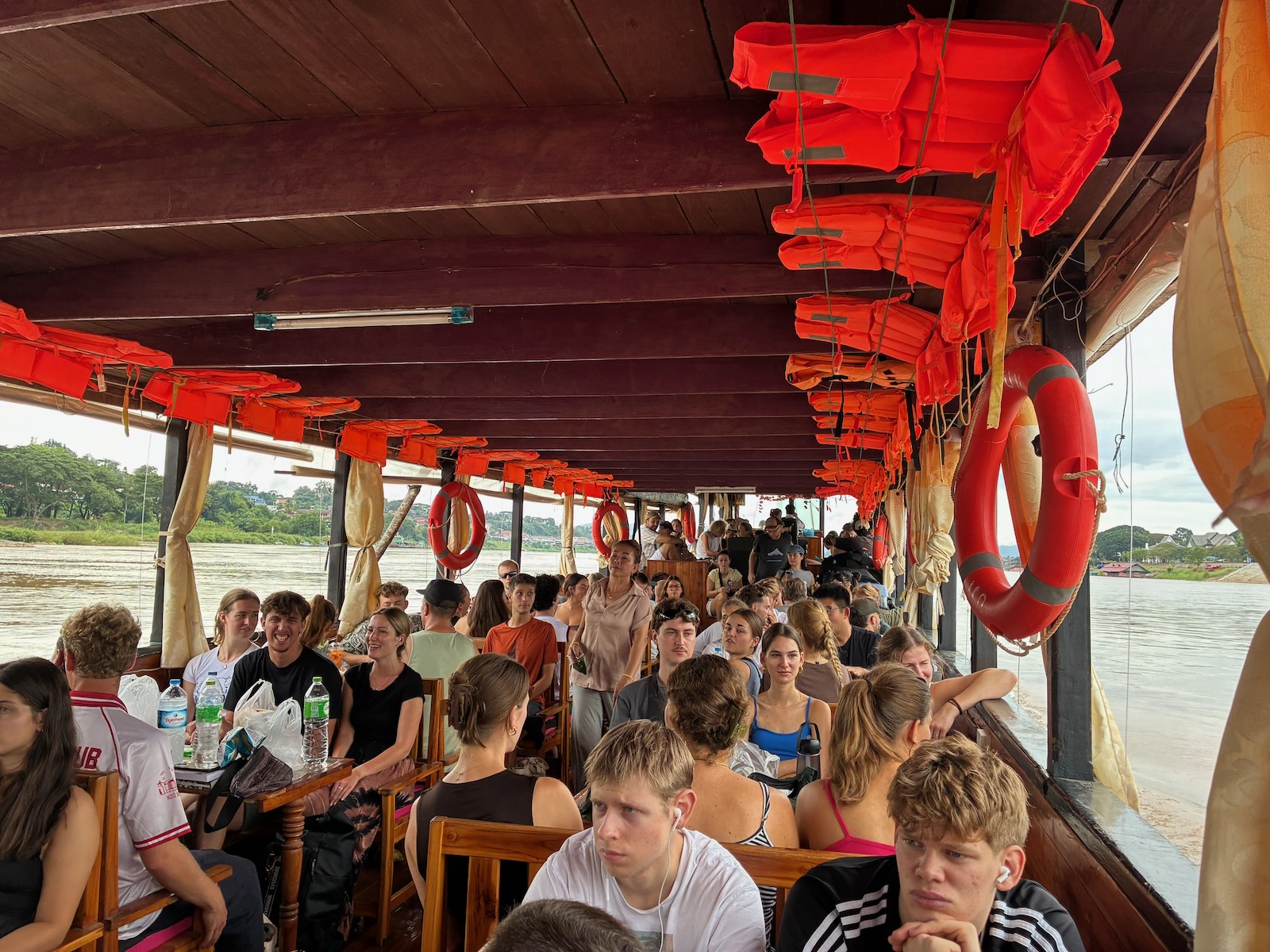
I don’t remember how we learned about this boat. It’s funny how the trip materializes in front of you when you don’t have a concrete plan. I think the boat must have come up in conversation with someone and I researched it from there to see if it was a real possibility. Part of this research included reading another travel blog post about what taking the slow boat was like. This post made it sound like a dramatic adventure way off the beaten path, a boat only used by Lao locals. Maybe that was the case at the time the author wrote the post, but Carlos and I were mildly surprised to board a boat that had well over a hundred and fifty tourists and maybe ten Lao people including the crew. The slow boat to Luang Prabang was a booze cruise of mainly Europeans in their twenties. And once we got to Luang Prabang, we realized that we were visiting a completely different town than Joe had visited. Nineteen years has changed a lot for Laos. We couldn’t help but feel like maybe we were missing something.
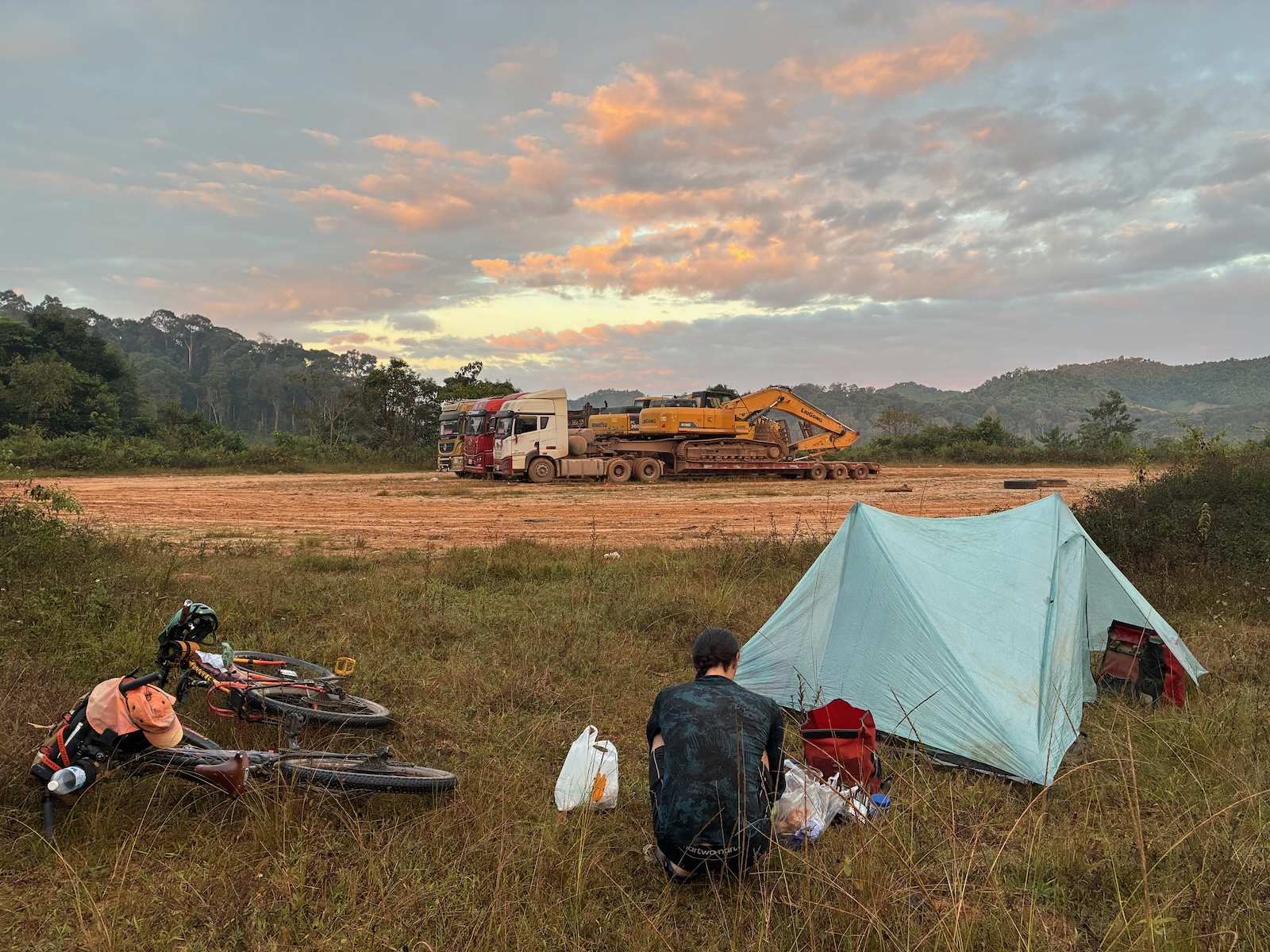
Traveling by bicycle is a strange thing. We didn’t get to do it as much as we had hoped in South America, so this time around we have really focused on prioritizing time in the saddle. We began Part III of riding, from Luang Prabang to Hanoi. We have just finished our seventh riding day in Sop Bao, fifteen miles to the border with Vietnam. We took a rest day in Muang Hiam, but besides that I struggle to tell you the names of each village we stayed in, or the “notable places” we passed by. We camped one night in a truck stop; that was notable.
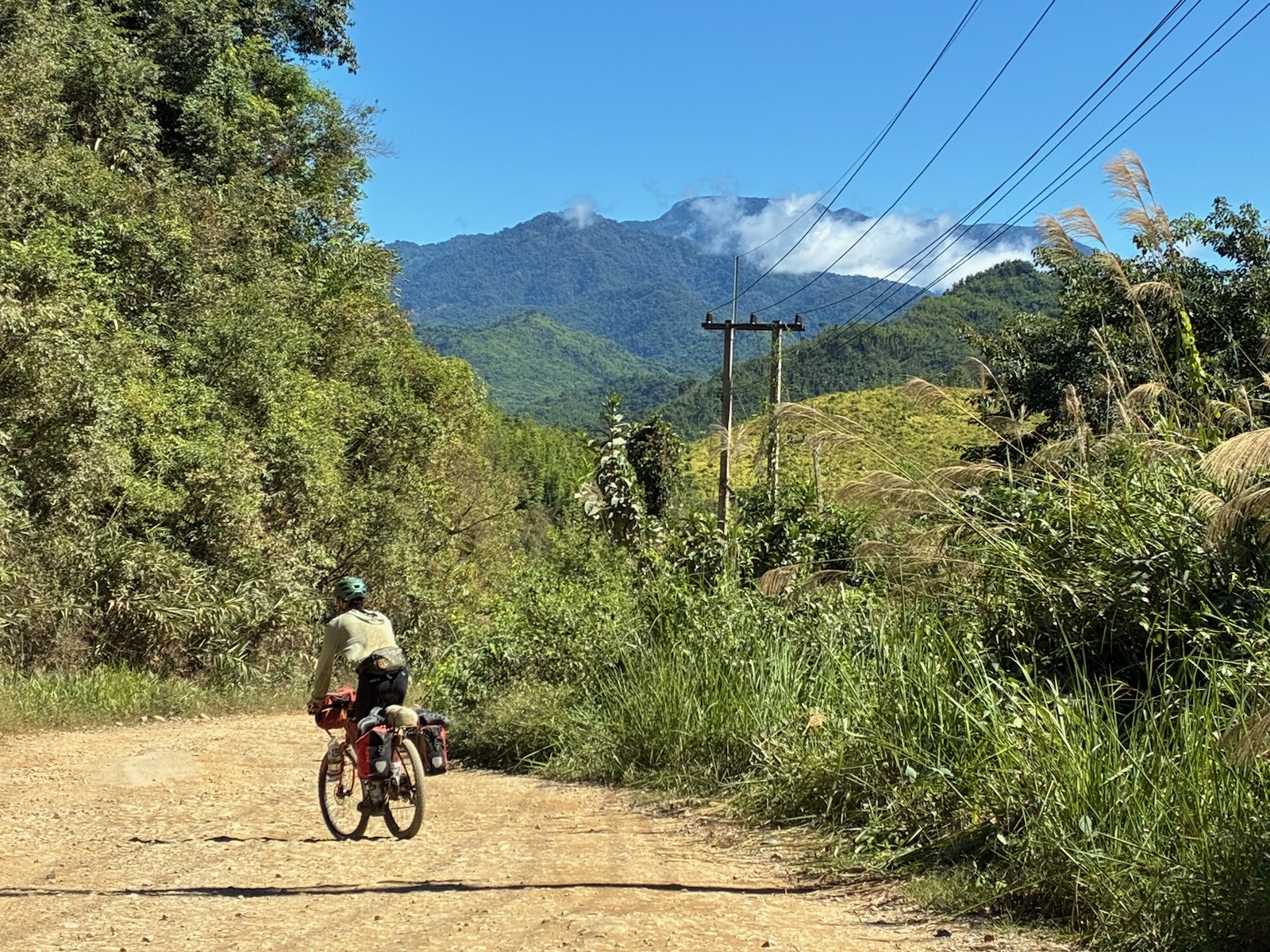
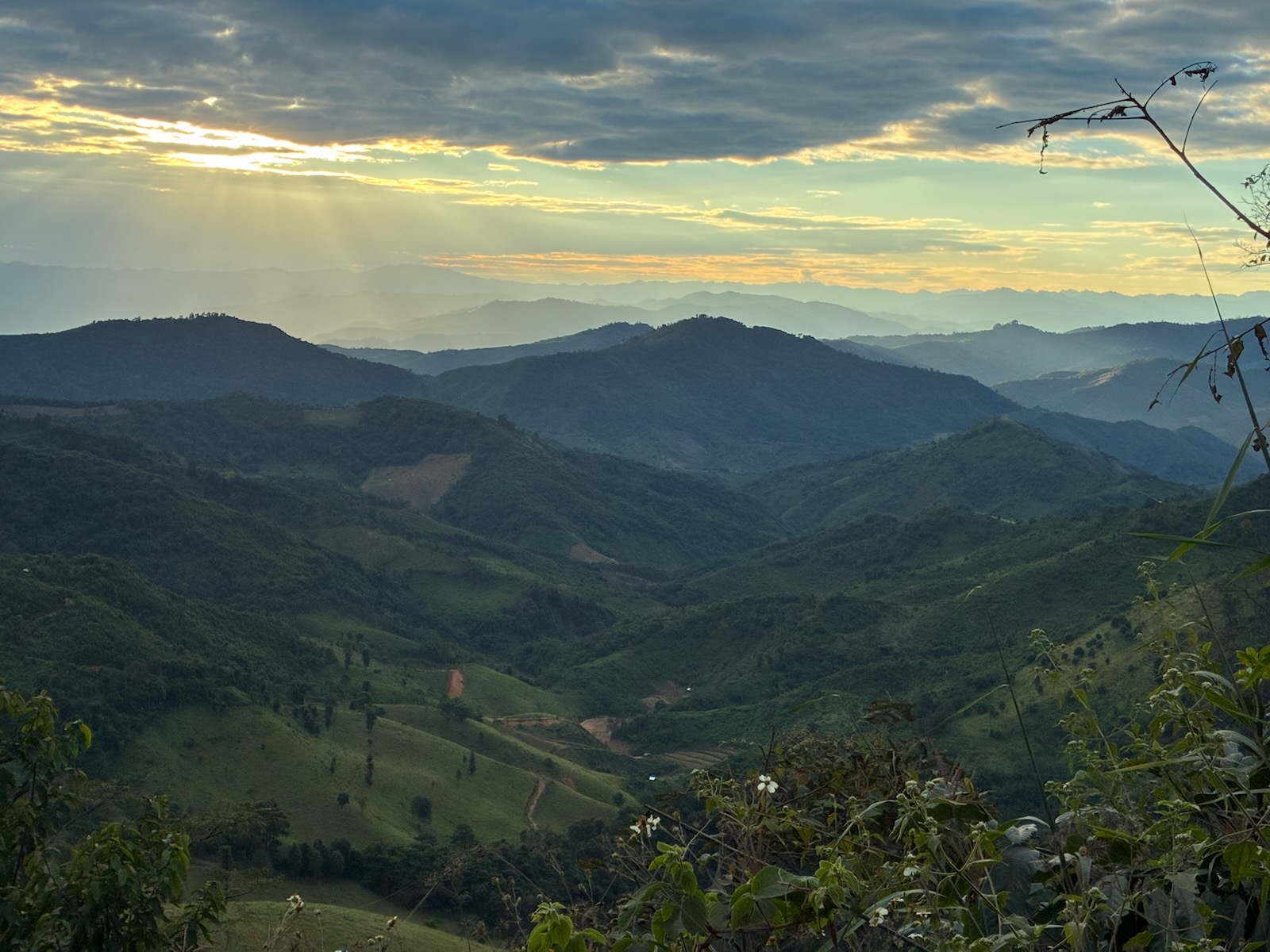
The “highways” we took in northern Laos were wonderful. The road conditions are absolutely terrible. The Thai border official even warned us about this. He said, “Thai roads good. Lao roads bad.” The road condition has been a curse and a boon, but mainly a boon in my opinion. The curse is the dust, or the mud. Are the roads “paved” in Laos? I think at one point they were. There were many stretches of delightfully smooth pavement with minimal potholes. But there were even more stretches of road where I wondered to myself, “how on earth did this happen?” Like when the whole road is one giant pothole. There’s no choice but to jump off the shelf of pavement onto the mixture of gravel and dust beneath. It’s like going down one stair on a bike. Or when there’s so many potholes and I’m swerving, trying not to go ka-PLUNK into a muddy pothole of unknown depth, but it’s impossible to avoid them all and ka-PLUNK I go. So anyways, the dust. I don’t know where it comes from or why it gathers inches thick on the road or why no amount of rain seems to wash it away. It is fine and powdery and tan. It’s such a lovely shade of tan that riding my bike through it is like getting a spray-tan all over my legs that I wash off at the end of the day in the shower. The first day of dusty riding I thought I got too much sun until I watched the color go down the drain. The dust wouldn’t be so terrible if it weren’t for the Chinese semi trucks that kick up huge dust storms every time they pass. All of the semi trucks we have seen in Laos are Chinese. And most of them are empty. As ex-employees of J.B. Hunt, we shake our heads at the empty beds. And they all create giant dust clouds that coat the trees, the grass, and us with dust. Sometimes the dust clouds lingered, and we would pull over and wait to give the truck time to drive well ahead of us to avoid following the dust cloud following the truck.
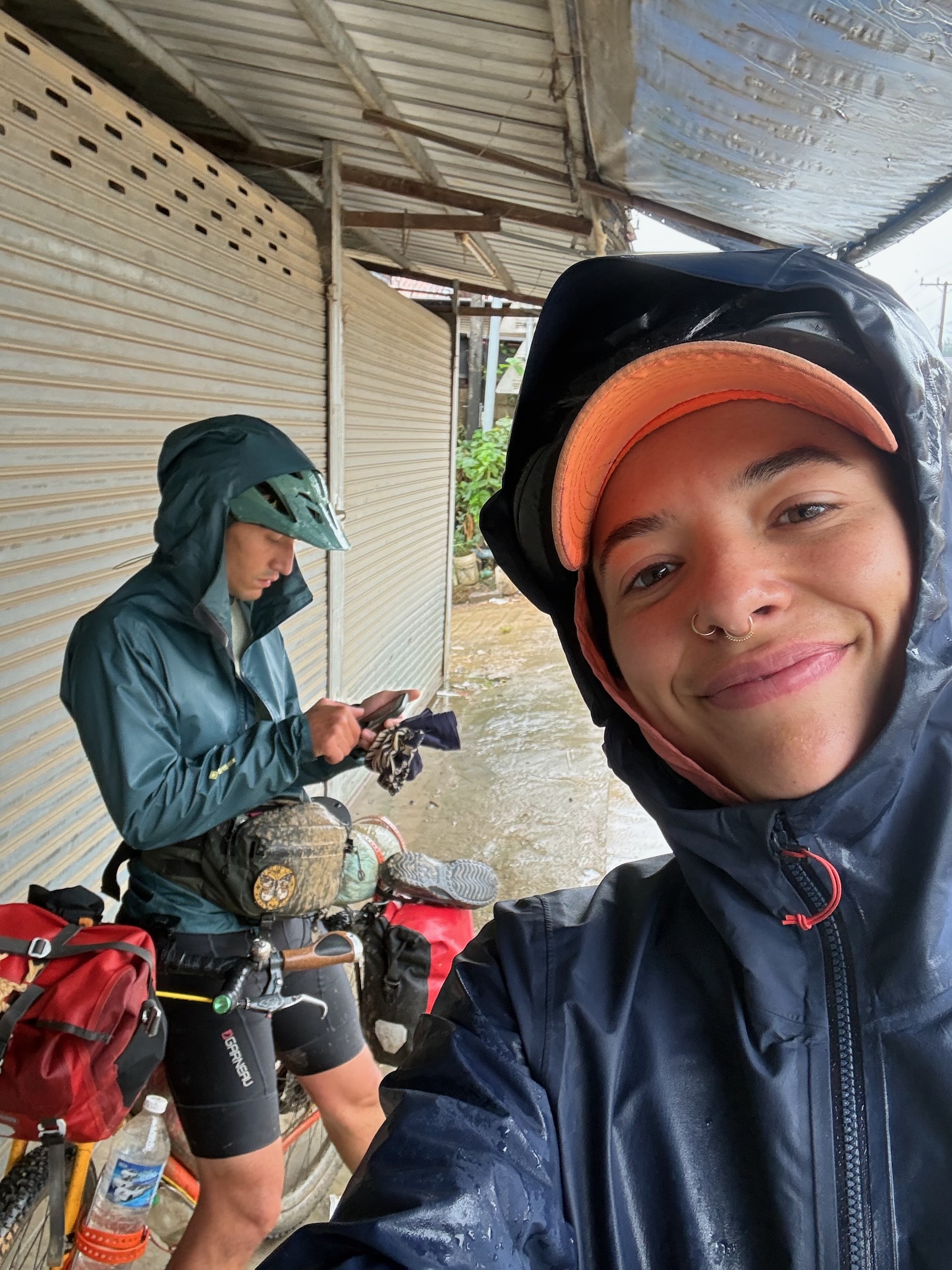
But the first two days from Luang Prabang we rode in the rain. The dust turned into a sludgy mixture that splashed all over our bicycles, our bags, and us, and dried on like cement. This dust or mud was the curse of the highways. But the boon is that there’s almost no traffic, and the conditions are so bad that vehicles can’t move at high speeds. Most of the traffic is motorcycles, driven by people from town to town or to the rice fields. Then there’s the Chinese semi trucks, but those were not so frequent that riding the highway was unpleasant. They also tended to pass in groups, which I thought was strange. Like a small pod of whales compared to the big schools of fish-motorcycles. And then passenger vehicles were very infrequent. We saw almost no sedans until Xam Nuea and its outskirts, which is a larger town near the Vietnamese border. Carlos and I had the main roads primarily to ourselves.
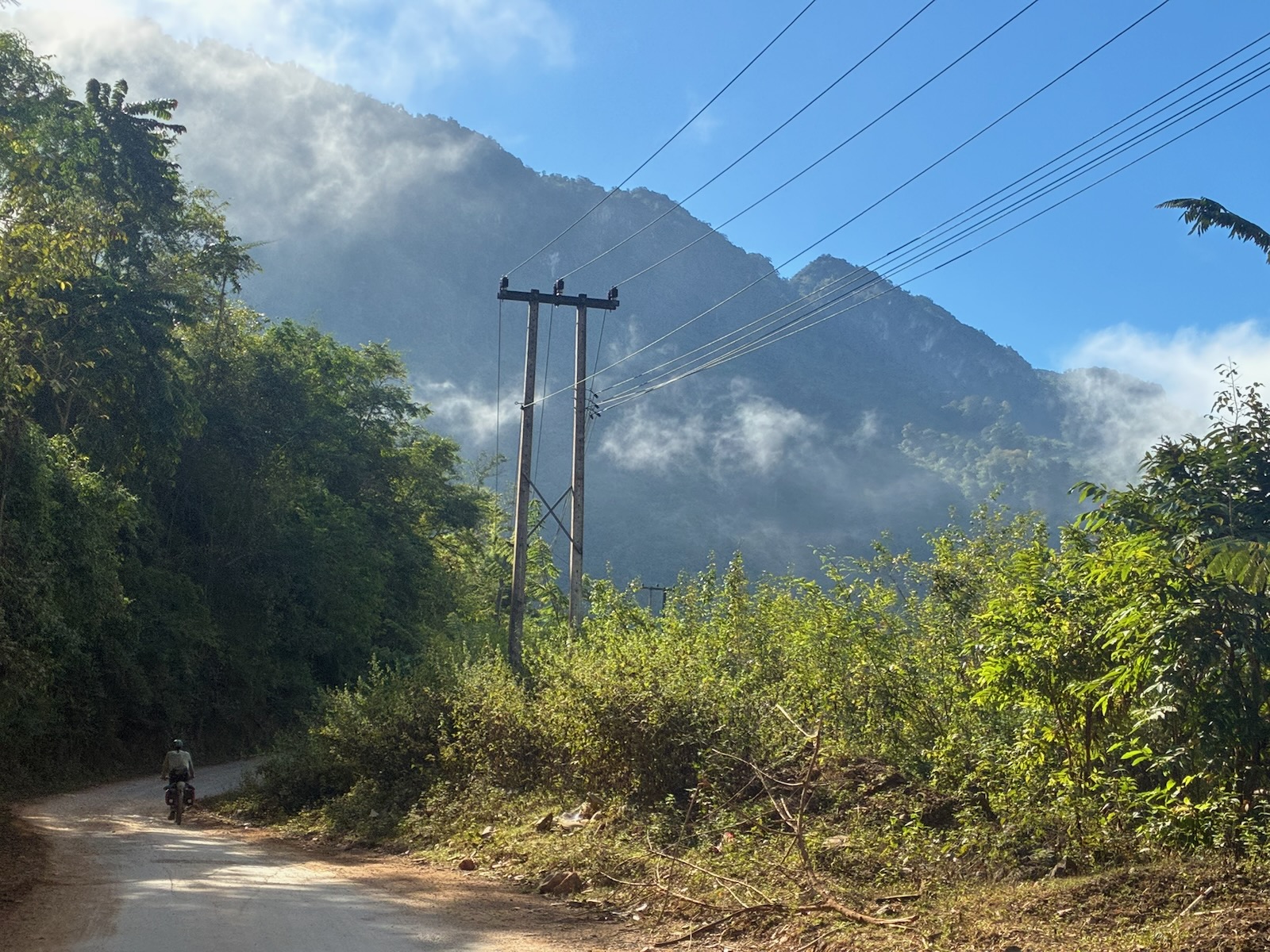
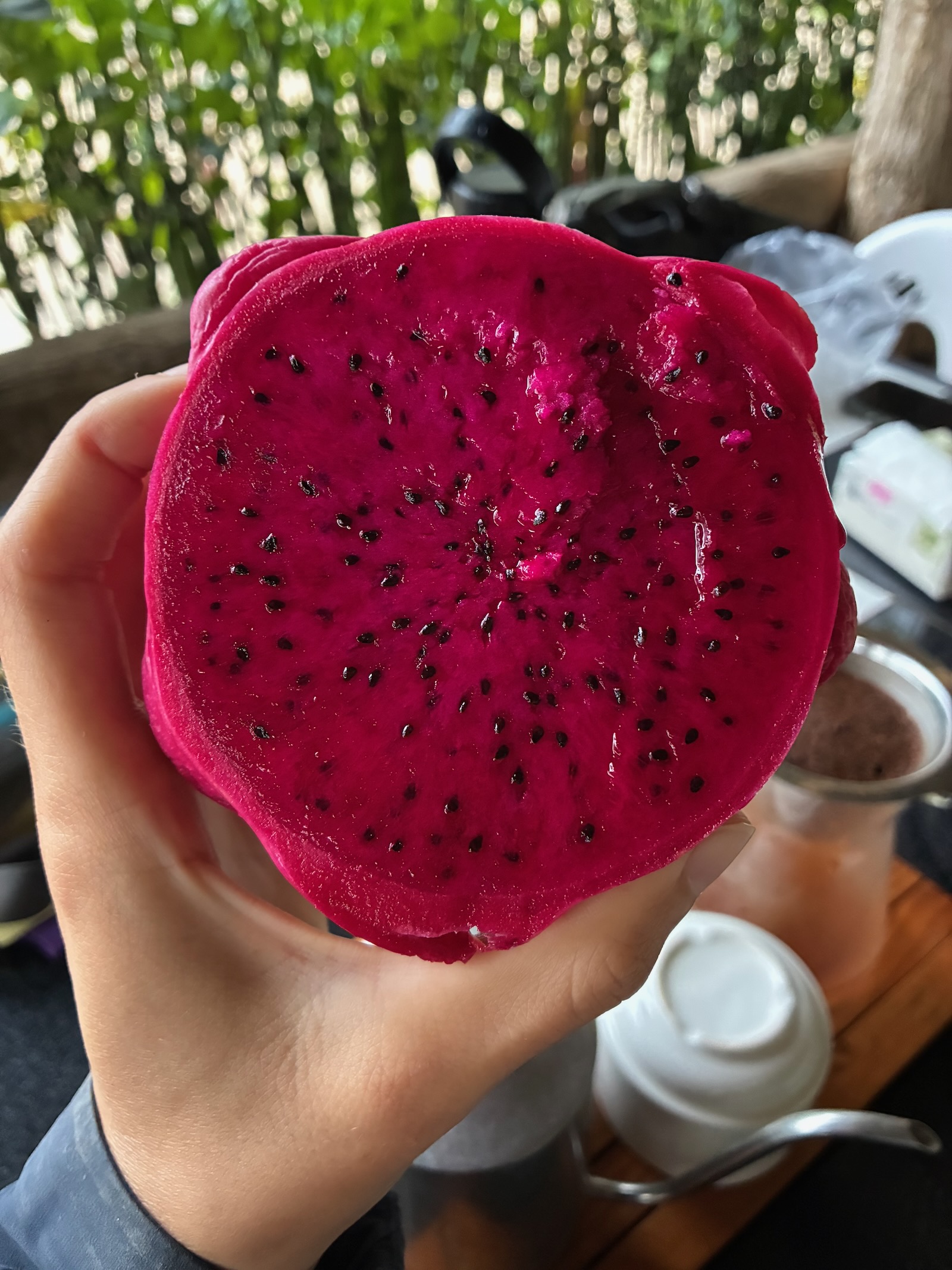
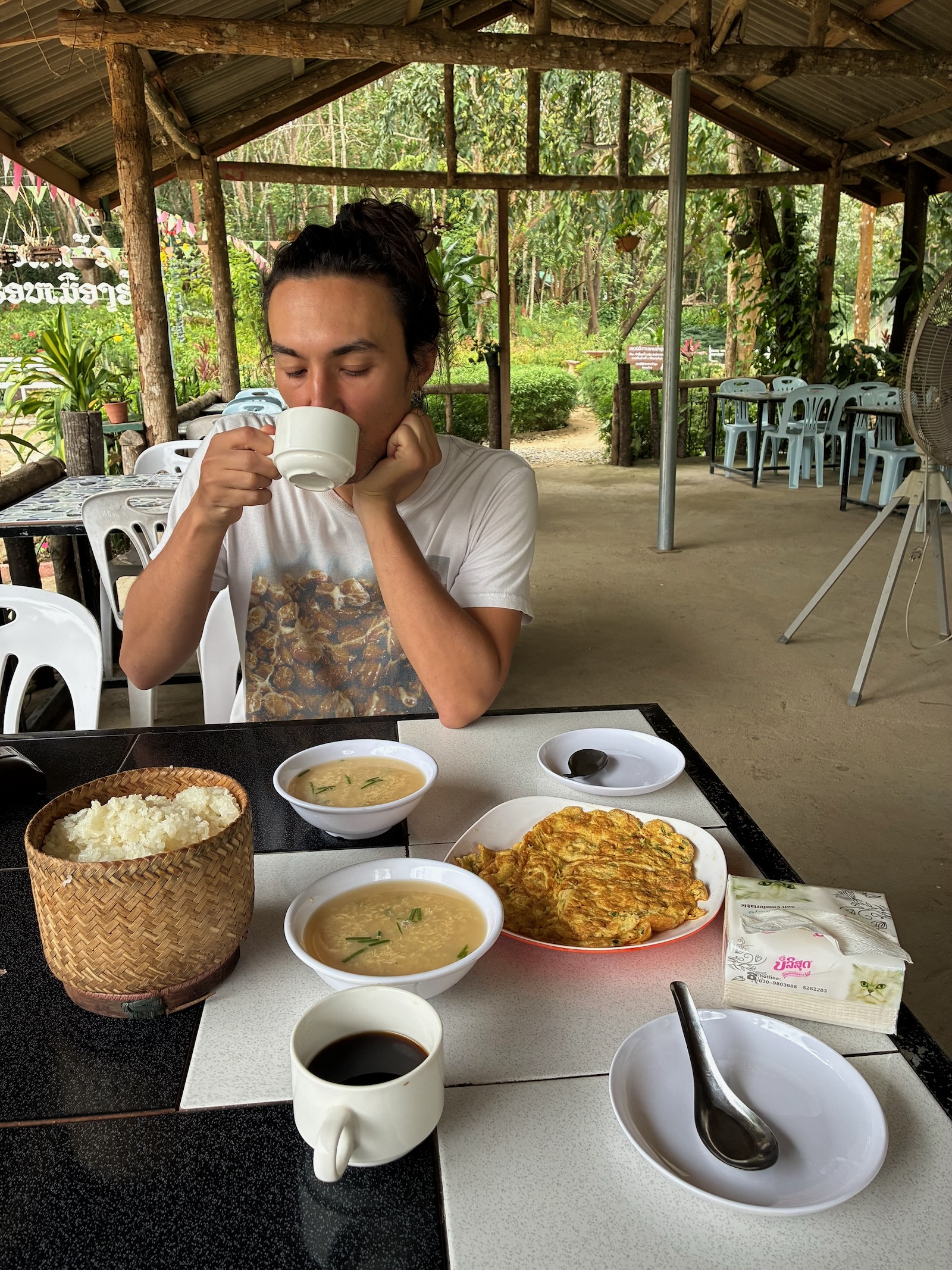
Riding a bicycle as a tourist is strange because the focus has to be the road, the space in between destinations. In fact, when we get to “destinations” a lot of times we don’t do anything. We just eat and go to sleep and maybe watch a movie. It’s strange to spend a whole day riding a bicycle through the countryside, through village after village, having children come out screaming to greet us because we’re “farangs” (foreigners), climbing very, very slowly up mountains again and again, not seeing any tourist until rolling into a specific town and all of a sudden seeing tourists. It comes as a surprise, like “oh, what’s the thing that tourists come here for?” In these parts of Laos, it’s the national parks. Some towns have more amenities, better infrastructure, and are positioned well for tourists to go on hikes or do tours. And naturally, tourists take buses to get to these places, because who the hell wants to ride a heavy-ass bike up mountain after mountain? One day we rode 50 miles with over 8,000 ft of elevation gain. I was so mad. I cussed out the mountains and myself and said “this is a stupid way to travel.” And you know what? It is a stupid way to travel. If mode of travel is a means to an end, then bike touring is the stupidest way to travel besides maybe walking. Bike touring is a means to nothing except bike touring. So I better really like bike touring, because that’s the point of bike touring.
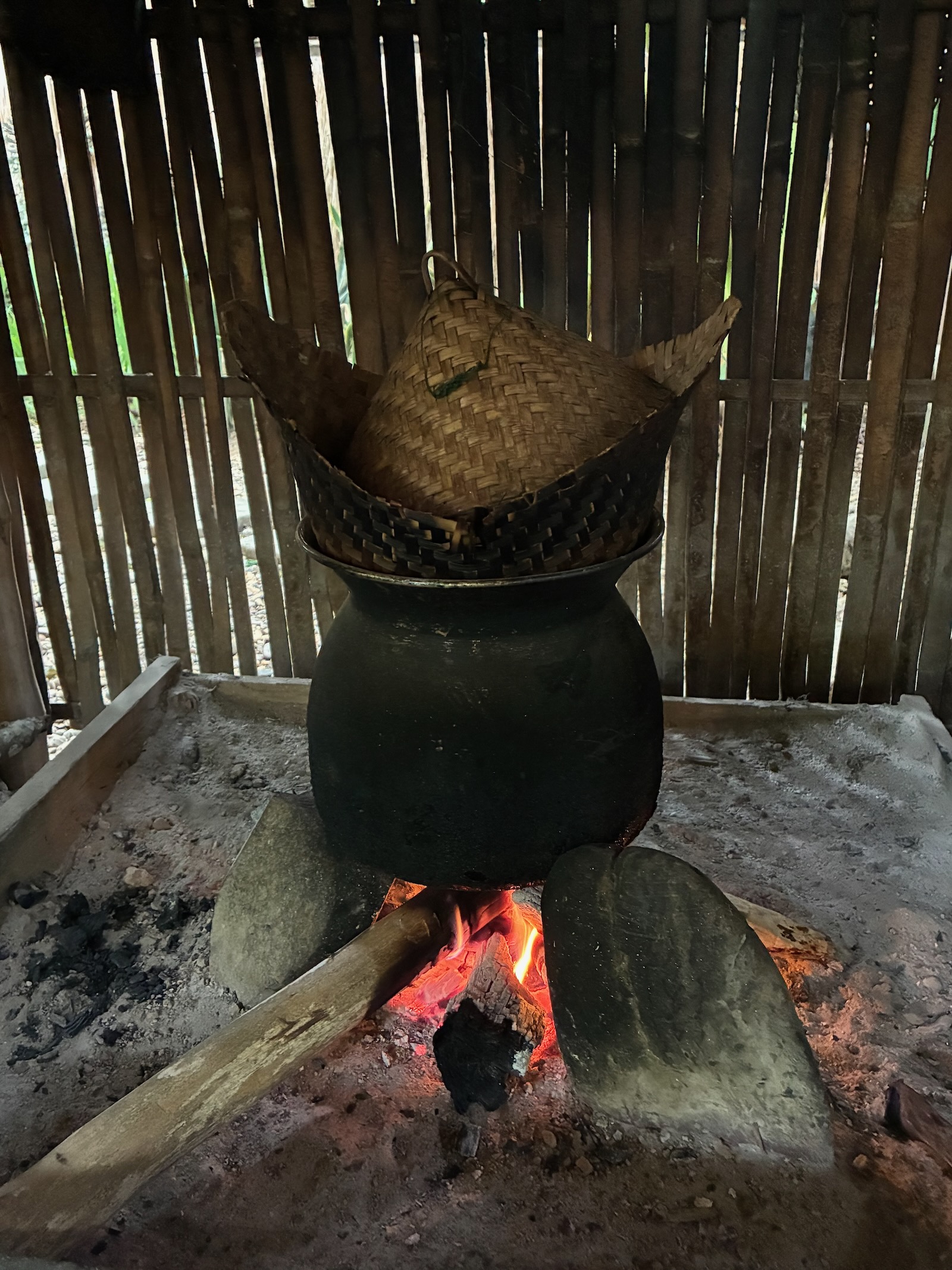
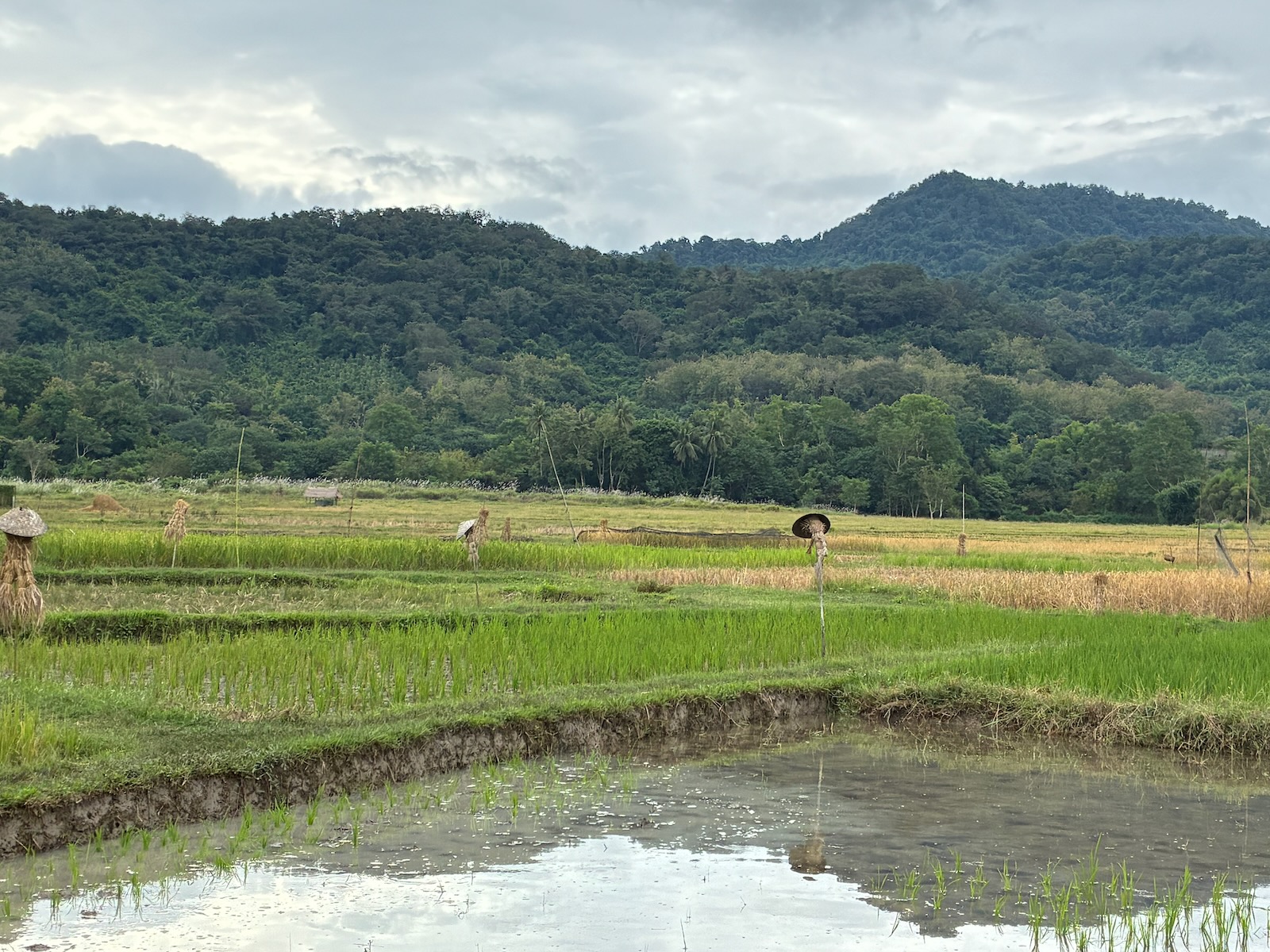
I like bike touring because of the spaces in between. These spaces in between have prompted me to turn the inner eye on my Western, tourist self-centeredness and entitlement. I have had to remember, when riding through throngs of smiling children, when passing toothy grandmas sitting on the front porch, that they are not the same faces I saw thirty minutes ago in the last village. I have had to remember that the people here are not here at my service. I know that sounds absurd, like “what the hell Michal, why do you think Lao people are your servants, you entitled ass?” But there is a reality to being a tourist, where locals attend to you in various ways. And I think this is at the heart of what we felt like we were missing in Luang Prabang. Tourism is wonderful. You show up at a place with money and people serve you. You do this enough times and you kind of start to expect people to attend to you any time you show up anywhere with money. Thailand was really good at tourism. But Laos has a lot less tourists, and none in some of the places we’ve visited, so there have been moments when we’re hungry, looking for food, and we see a large gathering of people at a place that looks like a restaurant but is actually a private party of some kind, and we’ve been turned away, because it’s not a restaurant. The food or the experience is not for sale. I see it as a real blessing that time traveling in the in-between spaces of Laos has required me to recognize that I show up to places where I am a guest, expecting things from people just because I have money. In some places, that is not guaranteed. And it’s these kinds of places that hold the the real magic. It’s being a person, watching people be people. I have had to remember that the people I am passing by are not part of the backdrop to my main character story of cycling through Laos. I am a weird pink spot that showed up one day in the backdrop of their lives that they may soon quickly forget.